
Buy anything from 5,000+ international stores. One checkout price. No surprise fees. Join 2M+ shoppers on Desertcart.
Desertcart purchases this item on your behalf and handles shipping, customs, and support to Belgium.
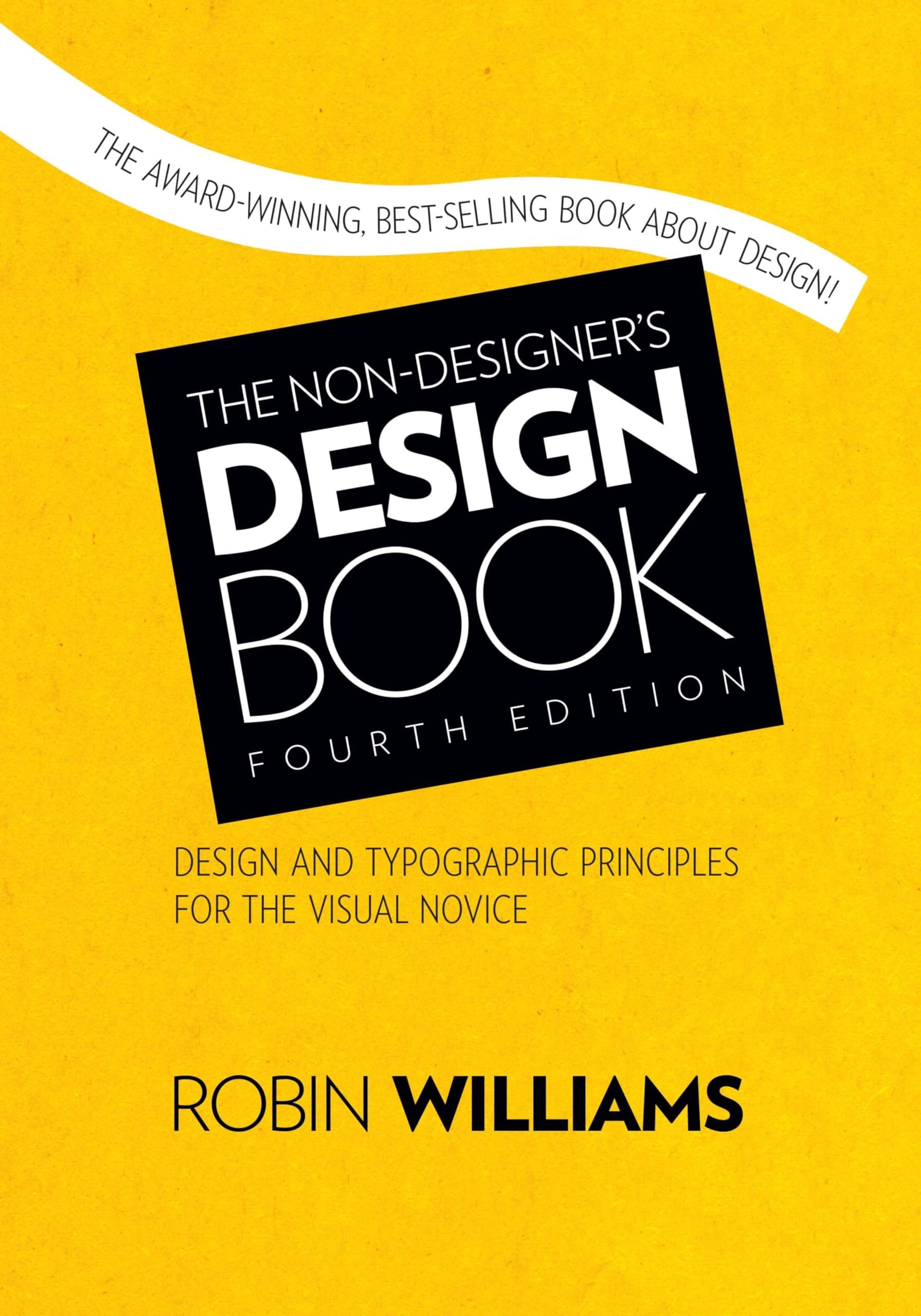
For nearly 20 years, designers and non-designers alike have been introduced to the fundamental principles of great design by author Robin Williams. Through her straightforward and light-hearted style, Robin has taught hundreds of thousands of people how to make their designs look professional using four surprisingly simple principles. Now in its fourth edition, The Non-Designerโs Design Book offers even more practical design advice, including a new chapter on the fundamentals of typography, more quizzes and exercises to train your Designer Eye, updated projects for you to try, and new visual and typographic examples to inspire your creativity. Whether youโre a Mac user or a Windows user, a type novice, or an aspiring graphic designer, you will find the instruction and inspiration to approach any design project with confidence. This essential guide to design will teach you The four principles of design that underlie every design project How to design with color How to design with type How to combine typefaces for maximum effect How to see and think like a professional designer Specific tips on designing newsletters, brochures, flyers, and other projects. Review: Screw the College Texbooks - As a community college student studying media and graphic design, the problem with the required class textbooks is that I find them very bland and drawn-out. They often dive right into the history of it all, typically using popular pieces of art from another era to exemplify what the chapter is trying to say. As a result, those books lose me very quickly because they're boring as heck and we are not usually tested on these things anyway. Which is a big problem right there. But if I do manage to make it through a few chapters, I rarely walk away being able to recall what I just read. It's hard to absorb material that consist of many daunting paragraphs that either beat around the bush or throw terms with definitions at me left and right. It also doesn't help when the pages are usually littered with distracting graphics and colors to try and give it style, which I find to be ironically counterproductive. And if the school curriculum itself doesn't help put the fundamental principals into practice with every assignment, it's like trying to sprint before you can properly walk. Now at the near-end of my program, I really wish I would've came across this book when I started out. It has helped my confidence in a way that reading endless amounts of articles and watching TED Talks could not. I keep wrestling with this idea that, despite my good grades and everything I have learned, I would never feel like I could produce something that I would actually consider a pretty good design. I would open a new document and never know where to begin. At first I thought it was because I wasn't creative, then I thought I was just a demotivated person in general, then I started to think my college curriculum was the biggest issue (too much emphasis on students knocking out assignments instead of learning), which for me resulted in a lot of trial and error to make a good design. Sometimes I lucked out and sometimes it was meh. All this doing and not enough knowing was starting to make me doubt this career path. It wasn't until I cracked opened this book and realized the big problem, I needed to go back to basics. It's straight-forward, uses very clear examples, and covers many topics; much of it pertaining to making print materials. Although a couple of things that weren't covered were grids and logos, I can make up for these in another hard-to-read textbook I have. It doesn't go super in-depth since this is meant more for beginners, but it still touches on each thing with a great amount of information so the reader understands each topic very well, all while using a plain layout for its information. After getting through this, I can highly suggest the book to anyone not feeling that great about their abilities if they're still fairly new to learning graphic design. Only people I probably wouldn't recommend this for are those at university or people disciplined enough to teach themselves, as this book may be nothing new to them. For me, this book has retaught me a lot of what I should already know by now, but embarrassed to say that I really didn't. Even though I have obviously studied these principles in order to get to this point, nothing I have read/watched/heard have really explained in plain English on how to put these things into practice. And that not knowing was the thing holding me back. I now have good reference material for whenever I start self-doubting. Robin Williams has made learning graphic design quite easier than I have been perceiving the subject this whole time, all in this one quick read. I now feel more ready to go back to the heavier material on these subjects, and actually memorize it all. Also, I'm only now realizing the hardest part over the years was learning Adobe's three main pieces of software and using them to their full potential, which seems like an endless journey in itself. It's almost aggravating realizing that I retained probably more from this book in one day, than the hundreds of dollars worth of college textbooks that mostly sat in my backpack each semester. Now I'm not saying this book will surely make you a pro after reading it all. I am saying that many people, like me, do much better when the material is explained as simply as possible, with effective visuals in a non-intimidating format. If you need something concise that starts from the beginning principles, and expands on them to make you more comfortable in creating professional looking layouts, I think this is the best option. Review: A Must-Have for Anyone Interested in Design! - obin Williams has crafted an incredibly accessible and insightful guide to design principles. Whether you're a complete beginner or someone looking to refine your skills, this book breaks down the four fundamental principles of designโcontrast, repetition, alignment, and proximityโin a way thatโs easy to understand and apply. The updated edition includes a fantastic chapter on typography, which is a game-changer for anyone working with text. The visual examples and exercises throughout the book make learning engaging and practical. Williams' writing style is lighthearted yet informative, making complex concepts feel effortless to grasp. If you want to elevate your design skillsโwhether for newsletters, flyers, websites, or presentationsโthis book is an absolute gem. I highly recommend it!


| Best Sellers Rank | #21,737 in Books ( See Top 100 in Books ) #89 in Graphic Design (Books) #286 in Textbooks (Special Features Stores) |
| Customer Reviews | 4.6 out of 5 stars 1,693 Reviews |
M**L
Screw the College Texbooks
As a community college student studying media and graphic design, the problem with the required class textbooks is that I find them very bland and drawn-out. They often dive right into the history of it all, typically using popular pieces of art from another era to exemplify what the chapter is trying to say. As a result, those books lose me very quickly because they're boring as heck and we are not usually tested on these things anyway. Which is a big problem right there. But if I do manage to make it through a few chapters, I rarely walk away being able to recall what I just read. It's hard to absorb material that consist of many daunting paragraphs that either beat around the bush or throw terms with definitions at me left and right. It also doesn't help when the pages are usually littered with distracting graphics and colors to try and give it style, which I find to be ironically counterproductive. And if the school curriculum itself doesn't help put the fundamental principals into practice with every assignment, it's like trying to sprint before you can properly walk. Now at the near-end of my program, I really wish I would've came across this book when I started out. It has helped my confidence in a way that reading endless amounts of articles and watching TED Talks could not. I keep wrestling with this idea that, despite my good grades and everything I have learned, I would never feel like I could produce something that I would actually consider a pretty good design. I would open a new document and never know where to begin. At first I thought it was because I wasn't creative, then I thought I was just a demotivated person in general, then I started to think my college curriculum was the biggest issue (too much emphasis on students knocking out assignments instead of learning), which for me resulted in a lot of trial and error to make a good design. Sometimes I lucked out and sometimes it was meh. All this doing and not enough knowing was starting to make me doubt this career path. It wasn't until I cracked opened this book and realized the big problem, I needed to go back to basics. It's straight-forward, uses very clear examples, and covers many topics; much of it pertaining to making print materials. Although a couple of things that weren't covered were grids and logos, I can make up for these in another hard-to-read textbook I have. It doesn't go super in-depth since this is meant more for beginners, but it still touches on each thing with a great amount of information so the reader understands each topic very well, all while using a plain layout for its information. After getting through this, I can highly suggest the book to anyone not feeling that great about their abilities if they're still fairly new to learning graphic design. Only people I probably wouldn't recommend this for are those at university or people disciplined enough to teach themselves, as this book may be nothing new to them. For me, this book has retaught me a lot of what I should already know by now, but embarrassed to say that I really didn't. Even though I have obviously studied these principles in order to get to this point, nothing I have read/watched/heard have really explained in plain English on how to put these things into practice. And that not knowing was the thing holding me back. I now have good reference material for whenever I start self-doubting. Robin Williams has made learning graphic design quite easier than I have been perceiving the subject this whole time, all in this one quick read. I now feel more ready to go back to the heavier material on these subjects, and actually memorize it all. Also, I'm only now realizing the hardest part over the years was learning Adobe's three main pieces of software and using them to their full potential, which seems like an endless journey in itself. It's almost aggravating realizing that I retained probably more from this book in one day, than the hundreds of dollars worth of college textbooks that mostly sat in my backpack each semester. Now I'm not saying this book will surely make you a pro after reading it all. I am saying that many people, like me, do much better when the material is explained as simply as possible, with effective visuals in a non-intimidating format. If you need something concise that starts from the beginning principles, and expands on them to make you more comfortable in creating professional looking layouts, I think this is the best option.
C**N
A Must-Have for Anyone Interested in Design!
obin Williams has crafted an incredibly accessible and insightful guide to design principles. Whether you're a complete beginner or someone looking to refine your skills, this book breaks down the four fundamental principles of designโcontrast, repetition, alignment, and proximityโin a way thatโs easy to understand and apply. The updated edition includes a fantastic chapter on typography, which is a game-changer for anyone working with text. The visual examples and exercises throughout the book make learning engaging and practical. Williams' writing style is lighthearted yet informative, making complex concepts feel effortless to grasp. If you want to elevate your design skillsโwhether for newsletters, flyers, websites, or presentationsโthis book is an absolute gem. I highly recommend it!
E**E
Great guide!
Exactly what I needed. Rules and explanations for design principles to help improve my presentations
H**M
Book Reviw
Helped me get through a college course and learned more than I thought I would from it.
J**A
Outstanding Primer for Learning Design
Robin really found a way to explain design concepts in a way that the uninitiated can grasp. I bought this for someone struggling to learn design and ended up purchasing another copy for myself even though I have years of design experience because I enjoyed the book so much. Especially good for anyone who wants to learn good design for a publication but also has merit in explaining basic design. Bravo, Robin! You truly are the BEST!
B**R
Best comprehensive, yet practical graphic design book Iโve read in years.
Since Iโm not a professional designer and my graphic design was rusty, I bought this book to brush up and improve my skills. Right away, I appreciated that this author spared me discussions of esoteric topicsโlike color theory and the nuances of typographyโthat are best reserved for other books to be read by a small number of academics and designers. Instead, she focused her book on helping me become a better designer quickly with lots of practical tips and techniques. The book was filled with lots of easy-to-apply suggestions I could start using right away to make my design work look more professional. To make it easy to grasp design concepts, the author had lots of before and after examples that helped me understand the differences between weak amateurish designs and eye-catching professional looking designs that I could be proud to share with others.
S**R
Very nice for a used textbook
I bought it good and used, and there even was a door Dash Code in there too to boot. Rock solid for sure.
K**G
Donโt judge this book by its cover
Iโve had this book recommended a couple of times over the years, but I hesitated to buy it because the covers were so horrible. Now that Iโve read the book (4th ed.-yellow cover), I can explain why: the cover designer followed virtually NONE of the principles taught in the book! I realize authors don't usually get to control the design of their book cover, but in this case I am shocked she didnโt insist on it contractually. Full star docked for the bad cover. (And BTW that horrible aqua and gray on the 3rd ed. cover was just as bad.) Cover aside, the interior of this book was quite lovely. Well designed, with ample examples of before/after design and specific techniques and tips. The title of the book is accurate: it is definitely for the non-designer (like me); I imagine designers and all but the most novice design students would be frustrated by the basic nature of this book. For me, I found validation that my organizational and alignment instincts were on target, but that I played it too safe with respect to contrast and creating visual interest. As my husband says, I am a little too matchy-matchy. But now I feel like I have the principles to start pushing my boundaries. I especially appreciated that the author included all the information about fonts used in the book. Minor criticisms: There were places that design terminology was used but not adequately explained (e.g., traditional typesetting terms). I would be cautious following the resume advice; it might make your print resume pretty, but will not translate into online systems and may actually damage your chances of being โfound.โ In todayโs world electronic and mobile world, I rarely get paper newsletters; it would be useful to have at least some basic advice about using these design principles in tools like MailChimp and Constant Contact where there are system constraints. Summary: 3 stars (4 stars overall minus 1 star for the bad cover)
G**C
Les bases du design claire
Peu de principes sont prรฉsentรฉ dans ce livre, mais ils suffiront ร amรฉliorer la faรงon dont vous aller organiser les รฉlรฉments dans l'espace de faรงon ร ce qu'ils soient plus harmonieux. De plus ceux-ci sont prรฉsentรฉs de faรงon claire avec de nombreux exemples et de petits exercices pour bien nous les faire comprendre.
J**Y
If you need to design material and don't have any training, this is great
I found this book years ago when I was impressed by the slideshow put together by a presenter at a seminar. She told me that she had a previous qualification in design, but recommended an earlier edition of this book. I read it and applied the principles I learned and was able to make much more professional-looking and attractive brochures, slideshows etc. I bought this one because I had lent the previous copy to someone who hadn't returned it and the admin assistant in my new position was producing very uninviting posters and brochures. This made a significant difference and was very much worth the money!
L**A
L'essentiel du design en quelques pages
Wow! Ce livre est formidable pour comprendre les principes de base et les appliquer!
V**A
Excelent book!
Often small business or startups don't have the budget to pay a graphic designer, and entrepreneurs end up doing all the design work themselves. I highly recommend this book to all entrepreneurs and everyone who manages their own business fan page and do everything in their own business.
E**E
Love this book!
It's exactly what the title said! Deffo recommend it other not designer designers! Lol
Trustpilot
1 month ago
2 weeks ago