
Desertcart purchases this item on your behalf and handles shipping, customs, and support to Belgium.
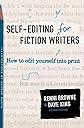
Hundreds of books have been written on the art of writing. Here at last is a book by two professional editors to teach writers the essential editing techniques of the trade that turn promising manuscripts into published novels and short stories. In this completely revised and updated second edition, Renni Browne and Dave King teach you, the writer, how to apply the professional book editing techniques they have developed to your own work. Chapters on dialogue, exposition, point of view, interior monologue, and other techniques take you through the same processes an expert editor would go through to perfect your manuscript. Each point is illustrated with examples, many drawn from the hundreds of books Browne and King have edited. This essential guide for writers teaches you how to: Show, Don't Tell: Master the crucial difference between narrative summary and immediate scenes to draw readers into the world youโve created. Sharpen Your Dialogue: Move beyond mechanics to eliminate formality, find each characterโs unique voice, and make every conversation advance your story. Strengthen Point of View: Learn to control narrative distance and maintain a consistent viewpoint to build a powerful, intimate connection with your reader. Refine Character and Pacing: Unobtrusively weave in characterization and exposition, and use proportion to control your storyโs rhythm and flow. Develop a Professional Voice: Identify and eliminate amateurish habits, from clichรฉs to weak verbs, to give your writing a sophisticated, polished edge. Review: A must have in any indie author's library! - One of the biggest surprises I encountered as a new author was the reality that writing the first draft of a book is the easy part! Sadly, I've learned that my free-flow, stream-of-consciousness way of story telling doesn't end up on the page as anything even close to what most people would expect from a best-selling novel. Of course I knew that I was going to need to edit, but I thought that editing was basically a spelling/grammar check followed by a quick read-through looking for any wrong words/typos that might slip through the software. WRONG! This was the first book I bought after coming to that realization, and it is still my go-to for quick-hit tips (and now reminders) on good editing practices. The authors do a great job of leading a novice writer through important editing concepts like "show don't tell", writing good dialogue and the proper use of "beats" to keep readers engaged. Each of the twelve chapters focuses on an attribute of good writing, and the core concepts are explained clearly and supported with multiple helpful examples. There are lots of nuggets of sage advice sprinkled throughout the book, but I found my favorite in chapter one: R.U.E or "resist the urge to explain". As a one-time corporate learning professional, I appreciate the author's use of checklists and practice exercises at the end of each chapter to reinforce what you learned. The checklists are handy quick-references that I refer back to frequently, and the exercises incorporate relevant examples that make it easy for you to apply what you just read. This book won't turn you into a professional editor over night, but it will help you improve the quality of your writing and give you a solid understanding of what professional editors look for. I used what I learned from this book to self-edit my first novel, and I was thrilled when the editor I hired told me that she thought I was a professional author with multiple books under my belt (I have one). Most of us are limited in how much we can spend on our writing habit each month but, trust me, your investment in โSelf-Editing for Fiction Writersโ will be money well-spent! Review: Great resource for writers. - OK, I love this book. I have so many post-it flags hanging on the page edges that my cat is entertained while I read. There is really good advice, examples of the concepts explained, and exercises to put them into practice. I have put my own writing through several of the exercises and they are really enjoyable to do.
| Best Sellers Rank | #19,160 in Books ( See Top 100 in Books ) #4 in Education Research (Books) #7 in Editing Writing Reference (Books) #10 in Research Reference Books |
| Customer Reviews | 4.6 out of 5 stars 1,781 Reviews |
D**R
A must have in any indie author's library!
One of the biggest surprises I encountered as a new author was the reality that writing the first draft of a book is the easy part! Sadly, I've learned that my free-flow, stream-of-consciousness way of story telling doesn't end up on the page as anything even close to what most people would expect from a best-selling novel. Of course I knew that I was going to need to edit, but I thought that editing was basically a spelling/grammar check followed by a quick read-through looking for any wrong words/typos that might slip through the software. WRONG! This was the first book I bought after coming to that realization, and it is still my go-to for quick-hit tips (and now reminders) on good editing practices. The authors do a great job of leading a novice writer through important editing concepts like "show don't tell", writing good dialogue and the proper use of "beats" to keep readers engaged. Each of the twelve chapters focuses on an attribute of good writing, and the core concepts are explained clearly and supported with multiple helpful examples. There are lots of nuggets of sage advice sprinkled throughout the book, but I found my favorite in chapter one: R.U.E or "resist the urge to explain". As a one-time corporate learning professional, I appreciate the author's use of checklists and practice exercises at the end of each chapter to reinforce what you learned. The checklists are handy quick-references that I refer back to frequently, and the exercises incorporate relevant examples that make it easy for you to apply what you just read. This book won't turn you into a professional editor over night, but it will help you improve the quality of your writing and give you a solid understanding of what professional editors look for. I used what I learned from this book to self-edit my first novel, and I was thrilled when the editor I hired told me that she thought I was a professional author with multiple books under my belt (I have one). Most of us are limited in how much we can spend on our writing habit each month but, trust me, your investment in โSelf-Editing for Fiction Writersโ will be money well-spent!
E**N
Great resource for writers.
OK, I love this book. I have so many post-it flags hanging on the page edges that my cat is entertained while I read. There is really good advice, examples of the concepts explained, and exercises to put them into practice. I have put my own writing through several of the exercises and they are really enjoyable to do.
J**R
Rules for Writing Bloodless Prose
The deeper I read into this book, the more it seemed each chapter was a scalpel given the writer to flay a manuscript, stripping off the flesh, blood, and muscle, and leaving a desiccated heap of bones. Strip out narrative summary, strip out adjectives and adverbs, strip out description, strip out exclamation points and italics. I was gratified to find, upon picking up a prize-winning or best-selling book, that their authors ignore these rules, if they ever even heard of them. Examples: 1. Always use "said" as a speaker attribution, not "he growled," "she snapped," etc., which "explain" the dialogue. From "Harry Potter and the Sorcerer's Stone," ch. 2: she screeched, she demanded, his aunt snapped, Uncle Vernon suggested, snapped Aunt Petunia, she cried, he whined, Dudley ordered, Harry murmured, Dudley moaned. 2. Eliminate almost all -ly adverbs, because, among other sins, they are "lazy writing" and "patronize" the reader. From "The Godfather" by Mario Puzo, ch. 1: formidably, physically, harshly, impressively, slyly, hoarsely, garishly, delicately, perfectly, mockingly, sadly, fiercely, strongly, shrewdly, lewdly, gaily, easily, thickly, powerfully, fully, disdainfully, angrily, easily, elaborately, immensely, lecherously, respectfully, notoriously, joyfully, casually, thoroughly, lightly, cheerfully, surely, carefully, vigorously, apologetically, inquiringly, slowly, incredulously, personally, prudently, truly, gingerly, questioningly, anxiously, etc., etc. 3. Don't write dialect phonetically. The authors quote a passage from Mark Twain's "Huckleberry Finn," with phrases like "I be ding-busted!" and decry it as "hard to follow," that it must be "translated." They quote approvingly from a passage in Catherine Cottle's "The Price of Milk and Honey," in which two allegedly poor southern blacks converse like two collegians at a campus Starbucks. For me, when I read Twain's black characters, I hear their voices and see their faces; I am drawn into the scene with delight at the music of their speech. Reading modern dialect, where everyone speaks with perfect "King's English" diction, strips individuality and poetry from dialogue. I give the book four stars because it does help the novice to avoid the worst offenses of hack writers. And they are honest that the decline of modern fiction has been driven by TV and movies; an MTV-addled generation, with their twitchy attention span, lacks the sustained focus great literature requires. But follow all the rules to the letter and you end up with a lifeless skeleton of a story. The masters, as quoted above, know better.
A**N
Must read for writers/authors BEFORE sending off to edit
This year I plan on finishing my debut novel, this book is amongst one of the most helpful books that share absolute gems with great examples to help self edit your book. Writing your book is only the first part, editing is where the work truly begins. And even though editing can be outsourced, this book really helps you look at your writing critically and helps you pinpoint why certain paragraphs or areas of your book werenโt working. At times you probably subconsciously knew that something was wrong, but you couldnโt put a finger to it; this book brings to light all those areas so that you can spot it right away and know how to fix it. This book called me out in the best way and I am so excited to edit my book and make it better!
D**C
An excellent manual to improving technique
If you're even considering the thought of editing your own work, whether it's a full length novel, novella, short story, flash or whatever other piece of fiction you have, go out and buy this book now. Read it cover to cover. Take notes. Read it again. Do the exercises. Relate it to your own work. Read it again. And again. And again. This book highlights what really are some of the most obvious fallacies a writer can make and it does it in the most poignant of ways. Everything they say is in the simplest terms. No bushes are being beaten and they don't cut any writer any slack. Chances are, your manuscript has at least three of the fatal errors outlined in this book. At the very least. More likely, it has nearly all of them. I'm unashamed to say that the latter is me, to one extent or another. Probably one of the greatest things to come out of this book is the acronym R.U.E., Resist the Urge to Explain. This carries over in multiple chapters, from reiterating explanation in dialogue to redundant points being made and back again. I found that a common theme in many of the editing points they make boils down to over-explaining. Writers want to press the point so badly, and make sure the reader understands exactly what they're saying that that they'll flog the dead horse explaining it. Often the author, usually subconsciously, doesn't trust the reader to get it so important points are reiterated at the expense of the reader's intelligence. As I write my fanfiction (yes, I write fanfiction) I'm more conscious of writing mistakes that I knew I shouldn't be making but it's something I need to re-reference in the book. For example, using dialogue tags such as "she said as she twirled her hair around her finger" are markedly amateurish. This is actually one of the points in the book I have the hardest time with. I get it but if the action is relevant, I don't see how it can weaken the writing. Here's a little further explanation on this from a comment I made on the original post-- . . . Chapter 11, Sophistication. According to the authors, "Both the 'as' construction and the '-ing construction' as used above are grammatically correct and express the action clearly and unambiguously. But notice that both of these constructions take a bit of action ("She pulled off her gloves") and tuck it away into a dependent clause ("Pulling off her gloves . . ."). This tends to place some of your action at one remove from your reader, to make the actions seem incidental, unimportant. If you use these constructions often, you weaken your writing. The two examples they gave are, "Pulling off her gloves, she turned to face him" and "As she pulled off her gloves, she turned to face him." They then go on to say-"We're not suggesting that you avoid these phrases altogether. There are going to be times when you want to write about two actions that are actually simultaneous and/or genuinely incidental-actions that deserve more than a dependent clause. And given the choice between an 'as' or '-ing' construction and a belabored, artificial alternative, you're well advised to use the 'as' or '-ing.' But be aware that hacks have long ago run these useful constructions into the ground. Learn to spot them in your own writing and, if you see more than one or two a page, start hunting around for alternatives." This is the second to last chapter so most of the points made in this one and the following are more about fine-tuning the work after all the other stuff has been fleshed out. The authors are crazy adamant about eliminating hacks (I can't count how many times they repeat the word) so any style common in hack writing, they've pounced on. So it's not that it's wrong, it's just more of an easy, lazy way out. And I know I'm guilty a hundred times over, at least. I still have the most trouble with that one and I'm more inclined to think they've just seen that technique used so much in writing that they want to see alternatives. Too much of anything is bad technique but I think this is the only borderline point they made. I also see flaws in works that I read, ones that I didn't see before, especially in web serials, because of this book. I bite my tongue, of course, because I'm not these people's editor and it's much more than just an improperly punctuated sentence but this book has made me so much more aware of others' flaws as well as my own weaknesses. For instance, I'm getting better at spotting redundant text in writing but that's still very hard for me. My eyes see someone making a point, not beating me over the head with it. That's another chapter I need to read again (as if I'm not going to read all of them again, right?) because I want to soak in all the information, make sure I'm getting it right and apply it to my own work. I want to recognize the redundancies, not just on a small scale but a much larger one in order to make my book better. It comes with learning to be a better editor that the ability to look at works more for fun kind of starts to fade. It becomes harder and harder to turn that editor off and just read, especially after reading a book like this. I just have to keep telling myself to shut up and read because I like the story. But I think that's a small price to pay in order to make my work that much better. I can chain the inner editor up when I'm not using her, even though I might be able to hear her screams but I'd rather have that than no inner editor and novels that should never see the light of day. So if you want to edit, you want to do it well, do it right and make your manuscript as good as it can be, pick up this book. I've even made it super easy for you. You don't even need to leave your seat. Just go to my Amazon widget to the right and click until you find the book and buy it. I promise you, you won't regret it. Really, there's a reason why every writer I've met, both in person and over the internet, recommends this book to edit their novels. Just remember, these are not hard and fast rules. Keeping to them too strictly will just result in sterile writing and you don't want that. Listen to your own judgment and make the call based on that.
J**X
Essential book for fiction writers
The two authors of this book formerly worked as editors for the publishing house Stein and Day, headed by the master writer and editor Sol Stein. Stein and Day published some of the greatest literature of the 20th century. In addition to his being an editor and publisher, Sol Stein is also an award-winning playwright and bestselling fiction author. On top of that, Stein wrote what are probably the two best instructional books of the craft of writing _Stein on Writing_, and _How to Grow a Novel_. I tell you all that just so you'll know the environment that helped shape the two authors of this book. They truly know their craft, and have proven it repeatedly. Stein himself has said that every fiction writer should read this book at least once a year. As for me, if Stein's two books are the most important books a writer can study, then _Self-Editing for Fiction Writers_ is tied for third with _The Elements of Style_. Just like Stein's books, the strength of this book is in its ground-level focus on the craft of editing, giving concrete and easily-digested examples and explaining things in a way you don't need a degree in English to understand. And it avoids any lofty or highbrow theory that is of little use to the average writer. No kidding--you sit down and read this book today (it's a quick read) and your writing will be better tomorrow. This book is especially valuable for those who are pursuing publication, as (so it's said) the publishing houses don't edit like they used to. So the closer your book is to a finished product when it hits the desk of the person who will either buy it or reject it, the more likely they will do the former than the latter. How important is editing? One need look no farther than the original published (and heavily edited) version of Stephen King's _The Stand_. That version was a fantastic book that was reviewed well and sold (as everyone knows) in the millions and still sells to this day. Contrast that with the version published later, the "expanded edition" that was King's original manuscript before an editor laid his axe to it. Bloated, confusing, tedious, and (for this reader) practically unreadable. All that fat the editor cut turned a bad book into a great one. A good example of the fact that the editing is every bit as important as the writing. If you're a writer, and hope to get published, there are very few books that will be as valuable to you as this one. And yes, Mr. Stein, I still read it at least once a year, if not more.
V**N
How All Do-It-Yourself Books Should Read
This will dramatically improve anyone's writing. Of a stack of books against my wall right now this is the only one I'd give a flawless five stars to. Second to this is James Scott Bells "Plot and Structure" from the Write Great Fiction series. Pros: -Smooth transitions in and out of examples that makes everything stunningly clear. How well edited this book is will floor even the hardest skeptic. -Superb tips from where to best place tags in dialogue to making speech more natural -It opens your eyes to a whole new world of smooth versus choppy writing -Adresses everything from science fiction to survival fiction -A stunning array of solid examples from top books of all stripes -Has half a chapter on action scenes and blows out of the water anything else I've read on the subject -Finally: wisdom on how to handle flashbacks! -I deeply, deeply wish I would have read this years ago. Buy two copies and give one to another novelist. You will have reward in Heaven. -Oh, and the easy beats chapter is the end-all word on the subject. Period. Cons: -Editors of such wisdom could have a little more to say. Needs an extra chapter or two. -The interior monologue chapter is a little too obscure, and not of sufficient depth for the subject (though still eye-opening). -The show and tell chapter only covers 2/3rds of the subject. It's more about definition and balance than how to achieve them. It's just faaaar too large of a subject for their cursory treatment of it. James Bell has a better system. Though the last few pages they have on this are solid and as always they pull clear examples out of everywhere. They are stunningly experienced.
A**S
Glad I came across this book when I did
I've finished the first draft of a ~100k word novel. After comparing the writing style of several popular books in the same genre, I was still confused about some aspects of novel writing. This book came at the perfect time to clear up some of the finer points for me. Thank you! Overall, most of the advice is geared towards making specific passages more engaging. I don't recall reading any guidance on revising a novel's plot structure. I still need to find a good book on that topic. I don't think it's advisable to read the entire book in one sitting. It is too content-dense. It isn't what I would call an "easy read". But it isn't pretentious either. The authors have condensed a lot of advice and examples into a relatively short, straightforward book. They don't pretend to have found a perfect formula. Rather they share several pieces of advice, with the caveat that their advice might not apply in all cases. I found myself disagreeing with some of their examples at times. But that's fine. We don't all appreciate the same forms of entertainment. Some "rules" are more about balance than strict adherence to fixed principles. The authors give examples of rules that have changed over time. What started out as a fresh, fun idea 20 years ago might have been imitated by too many people - to the point where it becomes a tired cliche that needs to be avoided. If I had tried to read this book half a year ago, it would have been the wrong time for me. I needed to complete my first draft BEFORE reading this book. I needed 100k+ words of practice with my clumsy novel writing style. Now I can refine my writing. And make new mistakes. :)
D**N
Must have for students of the craft
This book is incredible, packed with examples before and after the edit. It has exercises and proposed "solutions" at the end of the book. I wish all books on writing were as insightful as this one. The authors explain the craft with crystal clarity, no obscure terms are used, no obfuscation of meaning, just the essence. 100% pure educational value. Love it. Please write more books like this.
R**A
Brilliant!
This book is brilliant and full of excellent advice. Knowing what the work of an editor entails has made me a much better writer! Personally, I will still hire someone to edit my book but self-editing it first will make their job easier so that they can focus on the things I might have missed. If you're a language nerd (like me) and want to self-edit your book you should DEFINITELY read this book first!!
C**E
The best!
This book has become my bible. I'm happy. Now I know where I am going and where I'm supposed to go. It's hard work of course, but a really fun one.
A**R
Itโs a good buy
Good read - helpful insights
L**S
Guilty
This book taught me much. I am guilty of some errors more than others. I have had fair success with my own Heartfelt Flows and Misery but can see several ways to improve future works from this.
Trustpilot
3 days ago
1 day ago