Buy anything from 5,000+ international stores. One checkout price. No surprise fees. Join 2M+ shoppers on Desertcart.
Desertcart purchases this item on your behalf and handles shipping, customs, and support to Belgium.
🧭 Master your path with precision and rugged style!
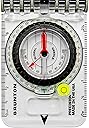
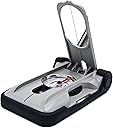
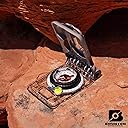
The Brunton TruArc20 Sighting Mirror Compass is a professional-grade navigation tool featuring a global needle accurate in both hemispheres, a 180° rotating sighting mirror, and tool-less declination adjustment. Designed for durability in harsh outdoor environments, it resists magnetic interference and includes a clinometer, bubble level, and protective cover. Made in the USA, it’s ideal for foresters, landscapers, contractors, and serious outdoor enthusiasts seeking reliable, precise navigation worldwide.


| ASIN | B00IL6MMTW |
| Additional Features | Global needle tilts 20˚, mirror and clinometer, reverse azimuth ring, bubble level, map magnifier, quick-reference lid. |
| Best Sellers Rank | #307,534 in Sports & Outdoors ( See Top 100 in Sports & Outdoors ) #562 in Compasses (Sports & Outdoors) |
| Brand | Brunton |
| Brand Name | Brunton |
| Customer Reviews | 4.3 out of 5 stars 178 Reviews |
| Global Trade Identification Number | 00080078915796 |
| Included Components | TruArc 20 Compass |
| Item Dimensions L x W | 4.1"L x 1"W |
| Item Type Name | fixed blade,hunting knife,hunting,outdoor |
| Item Weight | 0.23 Pounds |
| Manufacturer | Brunton Sporting Goods |
| Manufacturer Part Number | F-TRUARC20 |
| Material | Synthetic |
| Material Type | Synthetic |
| Model Number | F-TRUARC20 |
| Number of Items | 1 |
| Product Dimensions | 4.1"L x 1"W |
| Special Feature | Global needle tilts 20˚, mirror and clinometer, reverse azimuth ring, bubble level, map magnifier, quick-reference lid. Special Feature Global needle tilts 20˚, mirror and clinometer, reverse azimuth ring, bubble level, map magnifier, quick-reference lid. See more |
| UPC | 080078915796 |
| Unit Count | 1.0 Count |
| Warranty Description | Manufacturer Warranty |
P**E
4.5 stars when new - now 5 stars on 27-Feb-2020
This is a pretty good compromise. Maybe I was more lucky than most - quality control is a challenge everywhere - especially since the sixties. My TruArc20 arrived with all parts and a general instruction page for this group of compasses, not just the one I bought. I was able to find what I needed to know and how to adjust and position of all relevant parts to perform all advertised features and function - EXCEPT... the bullseye bubble level was glued into the base quite indifferently. I am sixty and I could see that it was way off just looking at it from the side. It also came right off with the pliers from a multitool. A new dab of glue and a known reference table and I was able to get it in there correctly. It is light in weight, so it won't be bulletproof. It all comes apart into plastic components so drying it out after a dunking in muddy water will be easy, and you WILL want to be sure that any grit is washed out from the several moving parts so operation remains easy. The sighting mirror is a bit small for signaling but easily moves 180 degrees to an open face position for maybe getting grit out of your eye. There is a detent provided to assist with holding the mirror in the "Sighting" position. Again, keep way from grit or clean it before it becomes damaged. The provided neck lanyard will help keep the compass protected and available inside your shirt, tunic, coat or poncho. It is a bit on the large size but that works better for older eyes. I keep mine stored in a 21oz storage tin by Heygidday that holds 2 altoidish tins for basic first aid and tinder, a sub 4" stainless folding knife, ferrocerium piece, and disposable lighter with room for the compass instruction sheet and space left over for other clever bits to be named later. Functional, educational, versatile... a book or reading online about advanced uses and how inclinometers are used is advised. Feb 2020 more thoughts. Increasing my star rating... I know what magnetic declination is. I knew what value I wanted to set the compass to. When I worked the bottom plastic cover off and pulled much too hard - the capsule popped out of the frame. So I popped it back in with the value I needed to set it to. Knowing where and what Polaris is is hand for checking the accuracy of any compass. Mine passed this test when new as a quality control test. Do you know why, or where to find out? These low rating reviews are to do with not doing the necessary reading about compass basics. It is not the tool, it is the user. In a bad situation this could be a Darwinian pass/fail test with permanent consequences. A person might drop, loose, or be deprived of any tool. What is in your head, knowledge, training, and experience, is never lost until you loose your mind (panic never helps). Your mind is the most important tool! There is no perfect product for all application and all users. If it is made by man, it will fail. Therefore you need at least one backup. I have continued to read and inquire about other uses for this, and many other compasses. Using this compass as an improvised sextant, much less accurate than a real sextant, is possible if you know what a sextant is, what is does, and more that just a little about the sky over your head. The knife on my belt, scrap-metal on the ground, metal in buildings around me, the car or truck I am standing near to, an iron concentration in the local area or any other magnetic interference can disturb the readings I get from my compass. But gravity is the pretty same as it always has been and Polaris moves so slowly you will never notice with the naked eye. The sun is pretty darn predictable. Our ancestors got around quite well without modern tools - are you up to the challenge, or will you fail the test. What example are you setting for your kids?
D**N
Almost perfect, no low light illumination
Almost a perfect compass, but one detail. I tried to night navigate and this compass has no lume. I had to turn my light on when there was no moonlight to see the dial. The shoe and the rubber boot keep the baseplate protected even if put into a pack and thrown about. The vial after 3 seasons still has no bubble, and even if it did get a bubble Brunton offers replacements. Once there is a bubble I will replace the compass vial with a lume version.
C**R
Rugged, accurate, multi-functional compass; made in USA; "heavy" for those who obsess about grams
The Brunton TruArc20 Sighting Mirror Compass is an excellent compass for a hiker/bushcrafter who wants a durable, accurate, multi-functional compass and doesn't mind a little added weight. I bought mine lightly used as an Amazon Warehouse Deal for $38 and at that price, it was a steal--worth every penny! I was surprised that there aren't more reviews of this compass available on hiking/camping blogs or YouTube. Part of the reason may be that it remains very similar to its predecessors: the Bruton 8099 Eclipse Pro and the Brunton O.S.S. 70M--the previous iterations of this compass. However, there have been some upgrades and since many folks may not be familar with those prior models, I'll go into detail here. ROBUST, "ARMORED" DESIGN, ALBEIT SLIGHTLY HEAVY Perhaps the most noticeable feature of this compass compared with competitors is its unique gray polymer top cover and black rubberized "boot" style base cover. This keeps the compass and transparent baseplate very well protected. I have no doubt this compass could easily survive many drops on the trail, even onto hard rocky surfaces, and still come away with its vital innards unscathed and perfectly usable. The downside of this rugged shell is that it adds weight. Mine weighs in at 109 grams, or just shy of a quarter pound. That's perfectly acceptable to me, but if you're an ultralight hiker who counts every gram, it bears mentioning that this is two or three times heavier than many competing sighting mirror compass models (Silva, Suunto, etc.) which do not have this kind of rugged exterior. I'm fine with the weight in this case, since I like knowing that my transparent baseplate, built in magnifying lens, and baseplate markings are well protected from scratches and wear. FAST, STABLE "GLOBAL" NEEDLE WITH RARE EARTH MAGNETS One of the best "upgrades" of the TruArc20 over earlier versions is the "global" needle with "ever north" rare earth magnets. When held reasonably level, the needle locks onto north almost instantaneously and appears less prone to interference from nearby metals/signals (though you should still be cognizant of the potential for interference). There's a spirit/bubble level to help ensure you're holding the compass perfectly level when every bit of accuracy matters; however, it's practically unnecessary, considering that the excellent needle seems unaffected even when the compass is held as much as 10 or 15 degrees off of true level. Nice. Also gone is Brunton's previous circle-in-circle (or "Orbital Sighting System") method of aligning the needle to the dial. The TruArc 20 returns to the more conventional "doghouse" system: basically, an arrow shaped outline that you align so that it frames/outlines the needle. I know people who either love or hate the older, circle-in-circle system. I suspect Brunton went back to the doghouse because it's less likely to turn off some potential buyers. I don't have a strong opinion on this, but since I'm accustomed to using the doghouse style, I'm right at home here. More important is that Brunton also restored the meridian lines on the inside of the compass dial (they were missing on previous versions), making it easier to align the compass with reference points on a map. Note that the dial is not luminous, so if you're wanting after-dark navigational functionality (i.e., hunters, hikers caught on the trail after sundown, etc.), you'll need to rely on a flashlight. My experience has been that glow-in-the-dark dials often need to be charged with a flashlight anyway, so I don't see this as a problem. I always carry a light of some kind. QUICK REFERENCE, QUICK ADJUST DESIGN My favorite feature of this compass is that the rugged design does not hinder the ease of operation. In fact, it's very user-friendliy for taking quick readings to verify that you're maintaining your desired heading. For quick heading checks, you only need to lift the smaller cover (which contains the oval mirror) to reveal the compass dial and a nicely magnified readout of your heading/bearing. (Inside the magnifier you also see the reciprocal heading, so no calculations are required to figure out how to go back the way you came--very handy if you're not the kind of die-hard navigator who already has all the reciprocal headings memorized!). With the smaller (mirrored) cover open to make this kind of heading check, the compass remains well protected by the secondary top cover and its rubber boot. Relief cuts in the secondary cover also expose the outer edges of the compass dial, allowing you to adjust your heading/bearing without needing to open the second cover or remove the boot to gain full access to the compass. It's very easy to adjust the heading, but I have never had it change accidentally when the compass is in my pack rubbing against other gear. At first, I was wary about whether the dial might get bumped and shift my heading, but now I trust that it simply stays wherever you leave it. Wonderful! The most challenging adjustment (though really not too bad once you learn the trick of it), is the tool-less declination adjustment. As others have noted, the instructions that come with the compass are very poor (not necessarily inaccurate, but not model-specific either, which can create confusion). Basically, you remove the rubber boot, lift the gray covers to get them out of the way, pinch the black outer rim/edges of the compass dial very securely to prevent it from moving, then use your thumb to rotate the clear inner portion of the dial until the mark at the TAIL of the needle outline ("doghouse") is set to the desired declination. The first time or two, I was too gentle and couldn't figure out how to adjust it. On the third try, I pushed harder and saw it budge, but also popped the compass dial right out of the base! (No worries, it snaps right back in.) After that, I finally had a "feel" for the right amount of pressure and was able to adjust it as desired. It is finnicky--and this is NOT something you'll be able to do with weak or arthritic hands--but I like the feature and I think it works fine, given that declination needs to be adjusted so infrequently. OTHER OBSERVATIONS This compass is made in the USA. I like that. It makes me feel all red, white, and blue inside. Reportedly, the rubber boot can be used as an eraser if you use a pencil for mapwork. I haven't tried that, and don't care. Any pencil I carry has its own eraser already. Previous iterations of this design had the neck lanyard attached to the compass, but mine now has the lanyard attached to the boot. That means that if you pull off the boot, you'll be holding a completely untethered compass. I like this layout better. It means the lanyard is out of the way whenever you remove the compass to lay it on a map, and it allows the boot to hang from your neck where it won't get lost. On some older models, you either had to keep the boot and the compass tethered together by the lanyard (which could be annoying when you wanted to separate the compass from the base for map work), or you had only the compass attached to the lanyard (and then had to find a place to put the boot, so as not to lose it, whenever you took it off). In short, this new layout seems to make more sense. Also, since the boot fits on so snugly, I have no concerns that the compass might pop out and fall to the ground inadvertently. It's not going anywhere. Since I bought mine through the Amazon Warehouse Deals as a lightly used product, I was disappointed to see that the previous buyer took out some of the water-resistant (plasticized) quick reference cards with "cheat notes" about how to use the compass, tie knots, administer first aid, etc. Although not essential, they're kind of neat. Fortunately, not all of the cards were missing, as mine did have a couple of Brunton "Topo Buddy" Universal Scale cards and, more importantly, a pure white card that serves as a bright background to increase the visibility of the clear compass dial when it is in the boot. (Otherwise, the black boot would show through the dial, making it hard to see the meridian lines, declination marks, and doghouse.) Of course, you can make/print your own customized cards and then laminate them with packing tape; just be sure to size them so they fit snugly inside the boot. Some reviews of the TruArc 20 on the internet claim that the inner compass dial is not transparent. That is incorrect. It is transparent--which is great when it comes to map work. However, right out of the box, there is a white static-cling sticker (made from the thin vinyl that window-cling holiday decorations are made from) on the back of the dial. Some purchasers may not realize they can remove it, which is easy and necessary if you want the dial to be entirely transparent. (Since it's a cling sticker, you can also put it back on later if you decide you want it on again. I think that's cool, albeit unnecessary as long as you have one of the white background cards that should come in the boot with any new TruArc20.) I suppose I should also mention that the baseplate on this compass has mile markings for the 1:24000 map scale on one side and 1:62,500 scale on the other side. A third side (the front end of the baseplate, opposite the hinged end) has imperial units (inches) with hash marks at intervals of 1/20th of an inch. And, of course, there is a built in rectangular-shaped magnifying lens (probably adequate to start a fire in a pinch, though I wouldn't want to rely on it), the built-in spirit level, and the magnified heading/bearing read out as well. The markings on the baseplate are printed on, not etched, so wear over time could be a problem (eventually, the marks will start to fade); however, unless you're doing a lot of mapwork, they should last quite awhile thanks to the protection of the rubber boot, which will absorb most of the wear and tear that causes other such compass marks to fade quicker. The compass also has three ways to measure slope, which is handy for bushcrafters/woodsmen who may want to measure the vertical height of a tree before felling it, or for hikers who want to measure the slope of a trail, etc. I used it in my back yard to measure a 55' tree that had its base attacked by termites. Using the inclinometer on this compass, I determined that I would need to cut the tree 20' off the ground to prevent it from hitting our house. Sure enough, the top of the tree landed two feet from striking the house, exactly as I had calculated. So that tells me it measured the angle accurately and that Brunton's (included) formula for calculating height works well. The oval mirror on this compass is certainly smaller than the rectangular mirrors on comparable sighting compasses (about half the normal size); however, it is large enough to do the job of helping you align the needle in the doghouse while sighting at a distant landmark to take a bearing. Helpfully, the mirror has a detent position at 45 degrees, which is the angle it should be when you hold the compass at eye level to sight in a landmark and need to see the compass needle in the mirror's reflection. There is a little wobble or "play" in the cover despite the detent position, but not enough to substantially impede the accuracy of the reading (in some cases, it might even help by allowing extra adjustment if you can't hold the compass exactly at eye level for some reason). The mirror is also large enough for two other important outdoors functions: (1) Checking your eye for to remove an embedded object/debris -- trust me, few things are worse than having something stuck in your eye and trying to get it out without a mirror to help you see what you're doing! (2) Signaling for help/attention -- it's smaller than the typical compass mirror, but it still makes a very noticeable flash if used to redirect bright, direct sunlight toward someone you wish to signal. This compass really deserves a dedicated set of instructions specific to this model. If you visit the Brunton website, click About, and then choose Product Manuals, you can navigate to the TruArc instructions and see the generic set they package with all TruArc models, including the TruArc 20. They're poorly written and say nothing about using the advanced features on this compass, which you'll have to learn for yourself. Here are the only other quibbles I have noticed, though none is a big deal to me: - The (north) tip of the needle could be slightly (1/16") longer to match the length of the doghouse outline a little more closely. - The included lanyard on mine was made from two loops of end-fused cordage; however, I think only the sheaths are heat fused (i.e., I doubt the inner strands were actually spliced), creating a potential weak point. For security's sake, I recommend replacing the lanyard with 550 paracord if you're going to wear it around your neck. - It would be nicer if the baseplate markings were etched so they would remain visible even if the paint wears off. CONCLUSIONS There is more to say about the compass, especially when it comes to the quirks of figuring out how to use it (since the included instructions that came with mine were fairly poor and incomplete); however, if you spend time with it, I suspect you'll come to appreciate its design and usability. I love the responsive, angle-tolerant needle and the ease of adjusting headings/bearings or sighting off landmarks. And for the low price I paid, I think it's a really excellent compass that will do anything I would ever need it for in the woods. Recommended!
M**2
Excellent compass with unfair negative reviews due to user errors
This is an excellent compass that seems well constructed and durable, with a boat load of features, it's made in the USA, and it holds a limited lifetime warranty (it sounds like as long as you don't abuse it or misuse it they'll fix or replace your compass for life). It's easy to use in sighting an azimuth. All of the features you'd need for maintaining a bearing are accessible with the rubber protective boot on, and the remainder of the features are accessed simply enough by simply taking the rubber boot off for map work, etc. It comes with two map reading cards, one in metric, one in imperial with various map scales in both UTM and standard miles. One of the features that I didn't know about when I bought it is that there are actually two clinometers. The first is simply a scale on the compass lid hinge that you line up the baseplate level then line up the grey body with your angle to be measured and read the angle on the side. The second, which I find more useful, uses the sighting mirror, declination scale (which goes to 90* in both directions) and a gravity seeking arrow (I supposed the correct term is a plumb). You set the compass to 270* west, turn it 90* on its side, and sight through the window while reading the angle in the mirror. Overall the compass works very well, and I would suggest it to anyone looking for a good compass. I would like to point out a few misnomers that I feel have led to many of the negative reviews. Firstly, the tool less declination adjustment (for those who don't know: declination is the measurement of difference between magnetic north as detected by the compass needle and true north as expressed on a map, this angle is given in degrees east or west depending on where you are). Is the tool less declination difficult to adjust? A little, but I'm pretty sure this is by design, so your declination doesn't change while you're using the compass to not get lost. Having your declination suddenly change while you're trying to keep a bearing could turn out disastrous, even deadly. Is tool less declination needed? Not really. Unless you're hiking all over the place, you'll likely set your declination once and leave it alone. I believe that most people are having a tremendously difficult time setting the declination because they're doing it wrong. Brunton's instructions are a little on the annoying side and difficult to understand, especially since the instructions that come with it, while technically for all of their compasses, shows pictures of the tru arc 5. While the instructions all basically apply the same, this could cause more than a little confusion. To make the adjustment easy, you first have to understand that there are four parts just to the inner circle of the compass (5 including the baseplate): the black knurled ring, the outer white 360 degree marked compass face, the white inner face with declination measurements, and the clear center capsule that holds the needle and declination measurements. To adjust the declination, you have to grip the clear center part, precisely under and on top of the needle, this is the part that's going to spin and make the adjustment; NOT the white ring with the declination measurements. I then find it easiest to grip the black knurled ring and while pinching firmly on the clear part with my right hand, adjust the black ring to rotate the declination adjustment. It's a little finicky, but I have no problem adjusting the measurement in under 5 seconds. The second issue I have read negative reviews about is something to the effect of "I can't use the compass for map reading with the rubber boot is tied to the lanyard, but if it's not tied to the lanyard I'll lose it" type complaint. At risk of sounding like a jerk, there is a simple solution. These folks complain about poor design, where I say it's entirely user error. You have to be 2% smarter than the compass. If you look at my pictures, I solved this problem pretty easily. I tied the lanyard to the compass with a larks head knot, then simply threaded the lanyard through the hole in the rubber boot. To keep the boot from falling off, I then slid the cord lock onto the lanyard, and just as an extra safety precaution, I tied a knot at the end of the lanyards. Now, when the boot is on, the lanyard just goes right through the boot and works great, and when you need to take the boot off to do map work, simply let it hang on the lanyard. The last issue I recall reading about is the compass needle "bottoming out" or pointing down. This is how the needle is designed. It's designed to work anywhere in the world at most angles. As an example of how this isn't an issue, my compass is currently sitting on my desk. On the underside of my desk are metal drawer guides which are attracting the compass needle. The needle is completely bottomed out pointing out the metal, but if I move my compass the needle still rotates freely, pointing to the metal. As soon as I remove it from the false magnetic field (just as if you were near an ore deposit while hiking which might give you a false north reading), it returns to pointing north.
S**A
My goto compass for hiking/hunting.
This is an excellent compass, with few drawbacks. I have the Suunto MC-2G and the TruArc 20. They were purchased together and are used to augment a GPS while hiking and hunting in VT mountains. Namely, to shoot azimuths at objects and triangulate position fixes/resections. Global needle is actually a small black disk about the size of a dime with a dipping needle extending out. It is the easiest to take into the field and shooting azimuths is the easiest and best I've used (lensatic out as no declination settings and my eyes are getting old). The magnified degree readings and back bearings are facing you, the bezel is set with one hand/finger on dial, and entire bezel capsule is visible in the mirror so parallax is kept to minimum. It is great to use. Accuracy and precision are limited by operator's technique. Compared to Suunto MC-2G, readings for azimuths for triangulation fixes/ resections using objects over 6 miles away have same error in my poor technique use. Both outperform Silva guide greatly. Downsides, couple. Fly in ointment is setting declination without a tool. Very hard to do, oil gets everywhere, and I broke the capsule off of baseplate like another reviewer. Putting it back together was easy. I can set it now, I think, if I had too but would not look forward to it. Does stay set though. Instructions....... Youtube it!!!!! Baseplate thick and quality, but rulers are printed (not etched) on it and they are already wearing off (it is only a month old). Bubble level a gimmick. Small. When leveled, global needle bottomed out and not functional. No kidding. Have to remove rubber cover to expose and use baseplate if want to be accurate with map work. Conversely, baseplate cover part of design, protective, does not prevent quick orientation of map, and looks cool according to others and me. The global needle points down quite a bit, and at first caused me great concern. I guess that is part of Brunton's design. It causes no loss of function, and it is noted by other reviewers as well. In summary, this is my goto compass in the field as it is a joy to use. And that is why I use it. If you need a better capsule with better meridian lines for compass to map work, would like a higher quality baseplate that is etched, can suffer only 2 degree increments of not enlarged bearing readings without back bearings, and a foolishly small magnifying lens, than the Suunto is a better compass.
I**Y
I'd look at other Brunton models
Pros: - "red Fred in the Shed"; - mirror; - level; - adjustable declination; - easy to use clinometer. Cons: - scale quality is awful. It's poorly printed on a label that is stuck to the back. You can see pixels of a font. I wouldn't be surprised if letters blurred in highly wet conditions. It's hard to read bearing value. - it is possible, but uncomfortable to work with a map, because the dial part isn't transparent at the bottom. It's hard to align guidelines of compass and map.
A**I
Not For Newbies
While l love the overall feel and capabilities of the TruArc 20, to me it is not for the newbie. The compass mirror is challenging, one must be mindful of the direction of movement in reading the compass, whilst the mirror is too narrow for ease of use. Despite the above, l find the magnified reader, as well as the green index marker very convenient plus the the size of the baseplate is very comfortable to hold. The use of removable runner chassis and plastic top cover is ingenious. Finally, l find the bezel rather too easy to move. In my opinion, it would be a useful tool for an experienced user.
M**H
Excellent compass. The instructions for adjusting declination are a ...
Excellent compass. The instructions for adjusting declination are a little bit inaccurate, but it's easy to figure out how to move the capsule separately from the bezel - which is really what needs to be done. The instructions insinuate the capsule rotates while the bezel doesn't; I found it easier to keep the capsule stationary while rotating the bezel instead. Excellent features, though, and the inclinometer is a great addition. My only *real* issue is that, because of the way the lanyard attaches, it's tough to fasten both the lanyard and the back cover onto the lanyard and still make it easy to take off the cover when needed.
A**R
Three Stars
Little hard to use specially when it comes to navigating
J**E
Premium Compass
If you are looking for the best look no further. Packed with features, very high quality and assured to be guaranteed against any fault no quibble. It doesnt come cheap but it is premium equipment. Global compatibility. Military/expedition grade equipment. A1.
C**N
buena brújula
me ha gustado mucho, es muy precisa, practica y ligera, el único de talle es que no tiene ninguno manual básico para usar todas sus herramientas
エ**ル
多機能コンパス
上部のミラー部分を持ち上げてサイティングする、レンザテイックコンパスのように使えます。 ゴムのブーツをはずすとベースプレートコンパス部分が出てきます。ベースプレート部分のプロトラクターゲージは、日本ではなじみがないインチ表示ですが、どの地域でも使えるよう、主だった縮尺のプロトラクターゲージ(ぺらぺらの薄い透明なプラスチックカード)が2枚付いてきます。この2枚は、白いフィルム状の紙みたいな物数枚とアイレットホールで固定されています。 このコンパスの売り?なのかどうかはわかりませんが、地図に磁北線を書かなくても使えるという機能。地域によって磁北線の度数が違いますが、このコンパスのダイヤルが4重構造になっていて、中心の部分が動くようになっており(でも相当力入れないと動きません。説明書のとおりやっても動きませんでした。海外のサイトでは、元々の説明書が間違っているんだと指摘がありました)磁北の修正ができるようになっています。一度セッティングすると、そのまま使えます。また、傾斜計もそなわっており、コンパスの接合部に簡易目盛りが切ってあったり、コンパスの中に細かい目盛りがふってありますので、測量などにも使えるでしょう。 グレーのカバーを上げるとプレートコンパス部が見えます。シルバのコンパスのように矢印がありますが、手前側(自分側)に矢印が付いているので、磁北偏差機能を使うときには、その矢印方向に合わせて磁北偏差を調整した方が良いでしょう。注意してください。それを合わせればシルバの言う1-2-3システムのように使うことができます。 方角目盛りのところに大きく見るためのバブルレンズが付いていますが、見る角度によってはとても見難いです。 付属のひもですが、コンパス本体を黄色の細ひもで止め、太紐を黄色の細紐に通しブーツの穴に通して、末端は結び目を作っておかないと、ひも調整用のストッパー(丸玉)が落ちて無くなってしまいます。 多機能ではあるのですが、コンパス本来の使用感としては十分だと思います。
M**N
Brunton Dropped the Ball on This One
The words I am looking for...."CAVEAT EMPTOR". The "tool-less" design was designed by a tool. Have used Brunton for years and very use to the "tool" design. After about an hour and having the compass in pieces, I did get the declination into at least a general setting. The new design does not give the declination accuracy as the old "tool" design Hope the declination does not change much in the next little while, I do not want to end up cleaning plastic pieces off the floor after I throw this thing at the wall
Trustpilot
2 weeks ago
3 weeks ago