

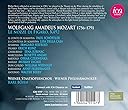
Nozze Di Figaro
Product ID: 61673052
Desertcart purchases this item on your behalf and handles shipping, customs, and support to Belgium.
Walter Berry reflected in an interview in 1985, "we played in the Theater an der Wien (during the rebuilding of the Vienna State Opera) and we developed a certain style, a Mozart style which was connected very much to the singers of that time... this was an incredible ensemble." Harold Rosenthal, Editor of Opera magazine, described the staged performance at London's Royal Festival Hall on 13 September 1954 as 'a sheer delight', highlighting the performances of Erich Kunz (Figaro) and Sena Jurinac (Cherubino), while Irmgard Seefried (Susanna) was 'one of the joys of this recording' (George Hall). These Richard Itter tapes of the live broadcast have never been released before, and the superb recording fully captures the atmosphere in this light-footed performance in a packed Royal Festival Hall to perfection Review: A great Figaro and a must for collectors - Of course, desertcart US has totally bungled the listing for this, merging it with multiple other recordings of Figaro. To be clear, this review refers to a performance released by ICA Classics of a liv performance of Figaro performed by the Vienna State Opera on a visit to London in 1954. I nearly passed this one over due to a pretty dismissive - and I now think, having listened to it, wrongheaded - review in The Gramophone. Of course, this shouldn't be anyone's first Figaro - the sound is mediocre mono albeit clear, there's no libretto, there are are some "fluffs" in this live performance, not every cast member is ideal, etc. But as a whole, it hangs together beautifully - a superior example of what was then considered the "new" style of Mozart performing. The cast overlaps with some of the famous studio recordings of the 1950s - in particular the Kleiber for Decca (in its Countess) and the Karajan for EMI (Cherubino and Figaro). But I think perhaps this is my preferred assortment of singers. From top to bottom, this cast sings with style and beauty (and, in the case of Jurinac's Cherubino, in a way perhaps never surpassed). Lisa Della Casa has rarely sounded more luminous (and she and Seefried refrain from their tendency to "peck" at the notes as was sometimes their wont). Kunz is a handsomely sung, sharply characterized Figaro, and even Paul Schoffler Wagnerian bass-baritone feels appropriately scaled. And then you have the Vienna Philharmonic of postwar vintage - not the gleaming powerhouse it would become in the 60s - but so deeply attuned to the nuances of Mozart's phrases, and Karl Bohm leading them with energy and purpose. More importantly, everyone is deeply inside the drama of this opera, there is a vitality to this performance that I find missing in both of Bohm's studio recordings, and both of Karajan's, for that matter. Kleiber pere may still reign supreme for me in this opera amongst studio recordings (and his recording, from 2 years after this performance, benefits from stereo sound), but this is an immensely satisfying Figaro. If you're a fan of one or all of these performers, do not hesitate. Review: Four Stars - Thoroughly enjoyed this DVD Audio.





J**J
A great Figaro and a must for collectors
Of course, amazon US has totally bungled the listing for this, merging it with multiple other recordings of Figaro. To be clear, this review refers to a performance released by ICA Classics of a liv performance of Figaro performed by the Vienna State Opera on a visit to London in 1954. I nearly passed this one over due to a pretty dismissive - and I now think, having listened to it, wrongheaded - review in The Gramophone. Of course, this shouldn't be anyone's first Figaro - the sound is mediocre mono albeit clear, there's no libretto, there are are some "fluffs" in this live performance, not every cast member is ideal, etc. But as a whole, it hangs together beautifully - a superior example of what was then considered the "new" style of Mozart performing. The cast overlaps with some of the famous studio recordings of the 1950s - in particular the Kleiber for Decca (in its Countess) and the Karajan for EMI (Cherubino and Figaro). But I think perhaps this is my preferred assortment of singers. From top to bottom, this cast sings with style and beauty (and, in the case of Jurinac's Cherubino, in a way perhaps never surpassed). Lisa Della Casa has rarely sounded more luminous (and she and Seefried refrain from their tendency to "peck" at the notes as was sometimes their wont). Kunz is a handsomely sung, sharply characterized Figaro, and even Paul Schoffler Wagnerian bass-baritone feels appropriately scaled. And then you have the Vienna Philharmonic of postwar vintage - not the gleaming powerhouse it would become in the 60s - but so deeply attuned to the nuances of Mozart's phrases, and Karl Bohm leading them with energy and purpose. More importantly, everyone is deeply inside the drama of this opera, there is a vitality to this performance that I find missing in both of Bohm's studio recordings, and both of Karajan's, for that matter. Kleiber pere may still reign supreme for me in this opera amongst studio recordings (and his recording, from 2 years after this performance, benefits from stereo sound), but this is an immensely satisfying Figaro. If you're a fan of one or all of these performers, do not hesitate.
A**D
Four Stars
Thoroughly enjoyed this DVD Audio.
G**L
pinza and walter: what a marriage
René Jacobs and the early music experts benefit from scholarship concerning cadenzas and instrumentation. Virtually ALL of the other recordings have infinitely better sound. Nonetheless, this is the definitive recording of "Le Nozze di Figaro." Why? Walter auditioned and hand picked all of his soloists. Can you imagine Pavarotti agreeing to do an audition? Everyone is either Italian or speaks impeccable Italian. The recitatives are at speech rhythm and constitute vital and exciting theater, rather than a dreary attempt by vain singers to show how beautiful their voices are in the wrong context. The overall architecture is brilliant. Walter builds the opera like a perfectly proportioned chateau. Finally, there is the presence of Ezio Pinza, a remarkable singing actor with a gorgeous voice and the required charm for this role. The sad news is that 70 years after this recording, noone has equaled it. The good news is that recent Mozart performances by Claudio Abbado and Daniel Harding have brought back Walter's thrilling recits and vibrant tempos. We are lucky to have recordings like this. A true "desert island disc." Gringo Tropical
D**R
In the bunker
While Nazi Germany went up in flames, Hirler's Deutsche Kunst movement went on. Raucheisen was recording German songs and artists eventually in the subway tracks to avoid alied bombs. This committment to art in distress, disregarding its motivation, produced recordings such as these. A young Schwarzkopf with amazingly good sound who shows the master she would be. The voice is surprisingly constant from here over the 30 years to her retirement. Listen to this and hear the time and place and a magnificent singer.
J**)
worthy
This Nozze di Figaro is more akin to Muti's four star Cosi Fan Tutte than his three star Don Giovanni (see my reviews). Some tempi at worst are slightly rushed here, though still noticable. Again Muti infuses the playing of the VPO with appropriate feeling. He does not quite match the warmth and lyrical grace of the equally dynamic version of Erich Kleiber/VPO Decca, but he is closer to Kleiber than not. Again Muti is graced with an excellent cast. I find Battle's Susanna animated/vivacious and tonally gorgeous (try her "Die Vieni non Tardar" for example). She does not pale compared to Hilde Gueden's Susanna for Kleiber. This is also true of Muti's Countess Margaret Price c.f Kleiber's, Lisa Della Casa. I do prefer Kleiber's Figaro Cesare Siepi to Muti's Figaro, Thomas Allen (sound and vivacity more than vocal skill). Jorma Hynninen sounds considerably superior to Kleiber's Alfred Poell as the Count-again not technically but tonally- Poell sounds unattractive beyond his wretched behavior pre-reform. Ann Murray is a good Cherubino. Another asset, 35 years after Kleiber with the same orchestra, is the VPO sound. It is more detailed, including some that I had not heard before. Peers: Kleiber/VPO/Decca; Bohm/VSO/Philips (1956), BPO/DG, BPO/Japan/ 1968 (this is my favorite Bohm performance including the Countess of Elisabeth Grummer and the Susanna of Erika Koth); Marriner/EMI
C**3
De Luxe Historical Package
This legendary 1937 Salzburg production of Mozart's evergreen opera buffa has been available on a variety of pirate labels in execrable sound. For this official issue on Andante, the combined efforts of renowned transfer enginners Seth Winner and Ward Marston painstakingly restored the recording from the original Selenephon film. The sound is definitely not state-of-the-art, but it captures vividly a special event with lively exchanges on the stage and between the stage and the orchestral pit. Bruno Walter is the mastermind of the performance and anyone who long considers him to be a genial and mellow Mozart conductor [an impression largely inculcated by his late Columbia recordings] will be in for a surprise. Walter gives a highly tense and edge-of-your-seat traversal of the score, adopting fast, sometimes relentlessly racing tempi. Overall his treatment of the entire score is undoubtedly searingly dramatic, but it also robs the score of some gaiety and humour. The real gems of the set are the two male leads, Figaro and Count Almaviva, sung respectively in the most idiomatic way possible by two stunning vocal actors of the Italian stage during the inter-war and war years, Ezio Pinza and Mariano Stabile. Pinza's Figaro is perhaps THE greatest of the lot. Possessing a lush basso of velvety warmth, he marries verbal acuity with vocal beauty and creates a lively, rumbustious character. The highlight of his performance is an absolutely marvelous rendition of Figaro's Act IV scena bewailing feminine wiles in which Figaro's hurt, anger and sarcasm were all startlingly realised. Mariano Stabile, the most famous Falstaff of his day, presents a dominant, menancing and libido-driven Count. He is a wooing seducer in his exchanges with Susanna and a frustrated,furious lord of the castle in his Act III scena. More dramatic and vivid interpretations of these roles are hard to imagine. The female principals are equally well-cast, with the Hungarian soprano Esther Rethy taking the lead as a lovely and characterful Susanna, and Czech Soprano Jarmila Novotna's charming and impetuous Cherubino. Besides them, Finnish soprano Aulikki Rautawaara sounds rather pallid as the Countess, but she does fit well into the ensemble. The de luxe package, complete with synopsis, the entire libretto with translations, artists biographies, an essay on the opera and two specially commissioned essays on the historical significance of the production, costs considerably, but anyone interested in historical performances should not let pass the opportunity to hear an important document, thoughtfully and carefully restored and packaged.
J**Y
Three Stars
A highlights disc should include "Ecco, La Marcia."
E**T
Perhaps, not for the casual listener...
This recording of Mozart's Marriage of Figaro has strengths and weaknesses. The recoding is accompanied by the complete libretto, artist profiles, essays, and rich historical information. But be aware that the recording technology in 1937 was somewhat limited, and listeners who are accustom to more modern recording technology may be distracted by these limits. The performance itself, is of course, outstanding. My 3 star rating here reflects the limits of the 1937 recording technology vs a more modern version, everything except this limitation is excellent.
B**ン
もう会えないと思っていたが…
以前ポニーキャニオンから出ていたが、廃盤になってから、もう聞く事は出来ないと諦めていた。もう会えないと思っていた人に会えた喜びを感じる。 先ず思ったより遥かに音が良い。この時代のライブとは思えない。ベームの68年のスタジオ録音に劣らない。 この時は主な歌手達がまだ若く、活き活きした生命力に溢れた歌を聞かせる。ベームも全盛期にあり、音楽が輝いている。オペラが大芸術では無く、大衆の娯楽だった時代に思いを馳せる事が出来る名演である。
D**R
Gruemmer at her best
Die beste und eine entscheidende Lücke fuellende Aufnahme (da in italienischer Sprache und nicht auf Deutsch wie unter Fricsay)von Elisabeth Gruemmer als Contessa,sehr guter Sound für 1963 !
H**M
Cantantes y director.
Grabación de referencia
B**E
La meilleure version des Noces ?
Des grands opéras de Mozart, les Noces de Figaro est peut-être celui qui a la plus riche discographie. Injustement décriée en France, la version Fricsay figure dans mon Panthéon personnel aux côtés de celles de Rosbaud, d'Erich Kleiber et de Karajan ( EMI ). Celle dirigée par Karl Boehm en concert à Londres, avec la Philharmonie de Vienne, est je crois, éditée pour la première fois en CD et se démarque totalement de sa version studio plus tardive pour DGG. Bien que saluée par la critique, cette version stéréo m'est toujours apparue très routinière sans la flamme et l'urgence qui caractérisent les versions précitées. A la lecture du générique, on retrouve quelques-uns des interprètes des versions Kleiber et Karajan mais ils sont tous ici en état de grâce. Pas d'airs de Marcelline et de Basile ce qui me convient parfaitement, ces deux airs ralentissant l'avancée de l'action : ils sont d''ailleurs le plus souvent coupés à la scène et c'est bien là que nous sommes : au théâtre, et le public réagit souvent aux facéties des chanteurs-comédiens. Sena Jurinac, incomparable Chérubin, Seefried et Kunz, le plus merveilleux couple de ( futurs ) jeunes mariés surpassent leurs prestations déjà formidables de la version Karajan et ils ont ici, comme leurs partenaires, tout loisir de distiller leurs récitatifs. Alfred Poell, n'est pas le mieux chantant des Almaviva mais quelle grinta, quel sens du théâtre, il met le public dans sa poche ( Correctif : Non, ce n'est pas Alfred Poell ici mais Paul Schoffler... ) quant à Lisa della Casa, elle aussi comtesse de la version Kleiber, le live la transcende, elle chante ses deux airs jusqu'au bout de son souffle avec une puissance d'incarnation exceptionnelle. Les seconds rôles sont tous parfaitement tenus, Basile notamment, et la prise de son est sans reproche, s'agissant d'un live de 1 950. Vous avez donc ici, animés par une direction d'orchestre vif-argent, tout simplement les meilleurs interprètes au disque pour quatre des principaux rôles et pour le cinquième sans doute le meilleur comédien. Alors, la meilleure version des Noces ? Peut-être bien ...
C**N
Inedita registrazione BBC
Storica interpretazione delle "Nozze" in una edizione in prima assoluta, provenendo da nastri BBC finora inediti Da ascoltare
Trustpilot
5 days ago
4 days ago