
Desertcart purchases this item on your behalf and handles shipping, customs, and support to Belgium.
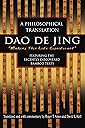
In 1993, archaeologists unearthed a set of ancient bamboo scrolls that contained the earliest known version of the Dao de jing . Composed more than two thousand years ago, this life-changing document offers a regimen of self-cultivation to attain personal excellence and revitalize moral behavior. Now in this luminous new translation, renowned China scholars Roger T. Ames and David L. Hall bring the timeless wisdom of the Dao de jing into our contemporary world. In this elegant volume, Ames and Hall feature the original Chinese texts of the Dao de jing and translate them into crisp, chiseled English that reads like poetry. Each of the eighty-one brief chapters is followed by clear, thought-provoking commentary exploring the layers of meaning in the text. This new version of one of the world's most influential documents will stand as both a compelling introduction to Daoist thought and as the classic modern English translation. Review: A must read - Great book, very thought provoking Review: Five Stars - Wonderful publication, service and quality.

| Best Sellers Rank | 233,524 in Books ( See Top 100 in Books ) 152 in Taoism (Books) 340 in Eastern Mystical Philosophy (Books) 402 in Philosophy of Theology |
| Customer Reviews | 4.5 out of 5 stars 183 Reviews |
E**E
A must read
Great book, very thought provoking
A**R
Five Stars
Wonderful publication, service and quality.
B**H
This is the way to understand way finding...
Heavy going but well worth it. I have been reliably informed by a western Taiji master (who studies in China) that this is one of the best translations of the text. I also found the detailed introduction, which sets the cultural context, most enlightening.
A**S
Book as described and delivered when expected.
Great price and good service.
A**D
Dao De Jing: Translated By Roger T Ames & David L Hall.
The Guodian tombs were unearthed in Jingmen, Hubei (China) in 1993. They were found to contain 804 bamboo (chu) slips, that preserved upon on them, a number of important Chinese wisdom texts - some known, some unknown. Amongst these texts was discovered the oldest known copy of the Dao De Jing - the Way of Virtue Classic - dating to around 300BCE. It compares favourably with the Mawangdui and Wang Bi versions, but has in edition an appended text entitled 'The Great One Gives Birth To The Waters.' Ames and Hall translate the entire Guodian Dao De Jing and this appended work. The peperback (2004) edition contains 241 numbered pages, and is presented in what ammounts to two parts, with a number of explanatory chapters (9) dealing with Chinese philosophy and its finer points, a glossary of key terms forming the first part, and the translated text(s), with introduction and explanation forming the second part. Ames and Hall present a very logical, and yet accessible translation. They have termed their translation of the earliest known version of Laozi's Daoist text as 'A Philosophical Translation', that although presented in the English language, nevertheless, conveys as near as possible the 'true' Chinese meaning and intent that lies with the Chinese source material. What is interesting is that Ames and Hall have managed to create a Western academic framework that allows ancient Chinese philosophical principles to be correctly observed and interpreted with the minimum of Western bias. The result is a compelling 'literal' translation that may well appear unfamiliar to the general reader who has experienced other renderings. This may serve to indicate the 'freshness' of the translation under review. All translations are a compromise between the original language meaning, and the cultural-psychological structures of the receiving language. As Chinese and English have developed quite separately from one another, it takes skill, experience and knowledge to convey concepts from one to the other, if any meaningful structure is to be maintained. Such an uncertain science as 'translation' invariably results in diverse interpretations that tend to be 'snap-shots' of the time and place that has created them. In the European imperial era, for instance, many translations of Chinese texts into English contained a Christian bias, and a political disrespect. Much was not understood about ancient Chinese culture. Today, with the internet, extensive travel and multiculturalism, there is no reasonable excuse for incorrect academics. This work is careful and exact. A fine piece of Western academia at its best. Through it its lens, we discover the world.
H**N
A fresh view of ancient concepts
This 'philosophical translation' provides a fresh view of daoist (taoist) concepts, uncontaminated by ages of Christian and Platonic interpretations of Chinese philosophy. It becomes clear that our (Western) language(s)as well as our idealistic or essentialist ways of thinking stand in the way of grasping the meaning - we should not say the 'essence' here, of course - of the ancient thinking attributed to Laozi. The insertion of the original characters invite the reader to participate in the process of interpretation. Unfortunately, my level of Chinese is not really sufficient, but still I got an idea of what the authors are trying to do: scrape off the layers of interpretations that hinder adequate understanding. Whether the process philopsophy of Whitehead, which seems to inspire the authors, consitutes an adequate frame or not, remains to be seen.
P**P
Finding a theme
This is the fourth translation of the Dao De I have engaged with, and only now do I finally understand the nature of this text. Put simply: the Dao De Zing is composed of sets of mnemonics which were/can be extemporized under a variety of conditions, by teachers and their pupils, for instance. The only problem for us now is that we do not have reliable access to the original doctrine(s) that informed these memory aids, so can only speculate about the meanings intended by the thematic material that has come down to us. This present translation is interesting insofar as it attempts to provide a plausible doctrine to explicate this text. But what is most interesting here is not the light process philosophy throws on the obscurities of the Chinese text, rather it is the light the Dao De Zing shines on the modern thought, underlining especially the narrowness of modern rationality, sited as it is in the fundamental intellectual confusion as defined by Immanuel Kant: how we are told we cannot know the thing-in-itself and yet can know that what we cannot know is a "thing". What the Dao De Zing tells us instead is that we cannot know the thing, here the Dao, and must therefore accept its existence on trust. And yet the text draws us to think about it, like seeing in the dark, listening to silence, touching nothing.
A**R
A little bit disappointed.
I am Chinese, and Dao De Jing is one of my favourite book. I’ve read different translations, but none of it reach the core of Dao De Jing. Most of them only translate the book Word by Word. When I saw this version on AMAZON, I put a great expectation on it, because it says “a philosophical translation”. Unfortunately, after I read it, I am bit disappointed. It even make it clear what is Dao. In Dao De Jing chapter 25, Laozi make it very clear “道法自然”, in this book translate it into “way-making emulates what is spontaneously so (ziran).” If you translate 道法自然 into English word by word, it can be 道-Dao 法-follow/copy 自然- nature, which is Dao follow the nature. But 法in Chinese also mean learn… from…, the order from… So one of 道法自然 meaning is 道为自然之法, which is Dao is the order/rules of nature in English. This is the base of Dao De Jing, if we translate or understand it in the different way, we won’t get what did Laozi say.
A**R
Original copy
Original copy. Nice
C**A
Ottima edizione di un classico
Per chi cerca una spiegazione chiara e ben scritta di questa opera fondamentale, questa è l'edizione migliore. L'introduzione spiega i termini-chiave usati in modo ricorrenti nel testo. Poi c'è il testo cinese, con rimandi a note filologiche e varianti, e la traduzione, capitolo per capitolo. Subito dopo la spiegazione di ogni aforisma. Utile e ben fatta.
S**D
I baught it for a friend. Not sure if good or not. Did get wet and soggy in the letter box
Unknown
S**F
A Classic Translated via Classical Scholarship & a (American) Pragmatic Perspectives
This book is one of the fundamental texts of civilization. It is distinctly Chinese, yet it now belongs to the world. Or at least it should belong to anyone interested in a unique and inviting perspective on the world. Of course, English language readers have a huge number of translations to choose from, but of the several that I’ve read, this is my favorite. Ames is the China scholar, while the late David Hall comes out of the traditions of process philosophy and pragmatism. Together, they bring a sense of scholarly precision about the source and context of the original texts (and sources and completeness always becomes an issue with a text this old and revered) along with a perspective about how we can understand this work in the contemporary world. For instance, they identify the concept of the focus and field as a central metaphor in the work. Their commentaries on each chapter often refer to ideas familiar to current readers as consistent with process philosophy and pragmatism. (Daoism isn’t consistently with a static metaphysics, that’s for sure.) The commentary helps readers grasp the often allusive words and implicit references in the text that would otherwise leave readers baffled and confused. For contemporary readers from the West, the text communicates in terms of metaphor and allusion that are alien to our normal way of thinking. This is how they define their project: We will argue that the defining purpose of the Daodejing is bringing into focus and sustaining a productive disposition that allows for the fullest appreciation of those specific things and events that constitute one’s field of experience. The project, simply put, is to get the most out of what each of us is: a quantum of unique experience. It is making this life significant. Ames, Roger; Hall, David (2010-05-12). Dao De Jing: A Philosophical Translation (Kindle Locations 285-288). Random House Publishing Group. Kindle Edition. There are no doubt many fine translations available for this classic, and each one no doubt sheds insight and re-creates the intention of the text, but this one is my reigning favorite. I feel like I’m viewing a new field with two trusted guides who help me gain the proper focus.
N**Y
Fabulous. Enlightening. Enriching
If had a poetic, rhyme-y feel in ancient chinese.... it ain't gonna be read that way in english and be accurate. So this is not the " Happy Little Poetry Book Of the Dao". It is however my favorite translation out of the 16 that I own. And it is, in my opinion, A beautifully written translation that does not sacrifice accuracy for beauty. The beauty of the Dao is in the meaning... not in how the words fit on the page next to the waterpainting of a crane! And yes, the commentary is an in depth, scholarly bit of writing; And, yes I had to look up a word or two... not a lot of leg work for illuminating the way. Well worth the 20 foot walk to get the dictionary. Not the easiest read ever.... but one of the best. I also like the Ellen Chen, the Henricks, and the Griggs translations a great deal. On the opposite end of the spectrum I keep the Witter Brynner copy in the bathroom in case I run out of Charmin!
Trustpilot
1 week ago
1 month ago