
Buy anything from 5,000+ international stores. One checkout price. No surprise fees. Join 2M+ shoppers on Desertcart.
Desertcart purchases this item on your behalf and handles shipping, customs, and support to Belgium.
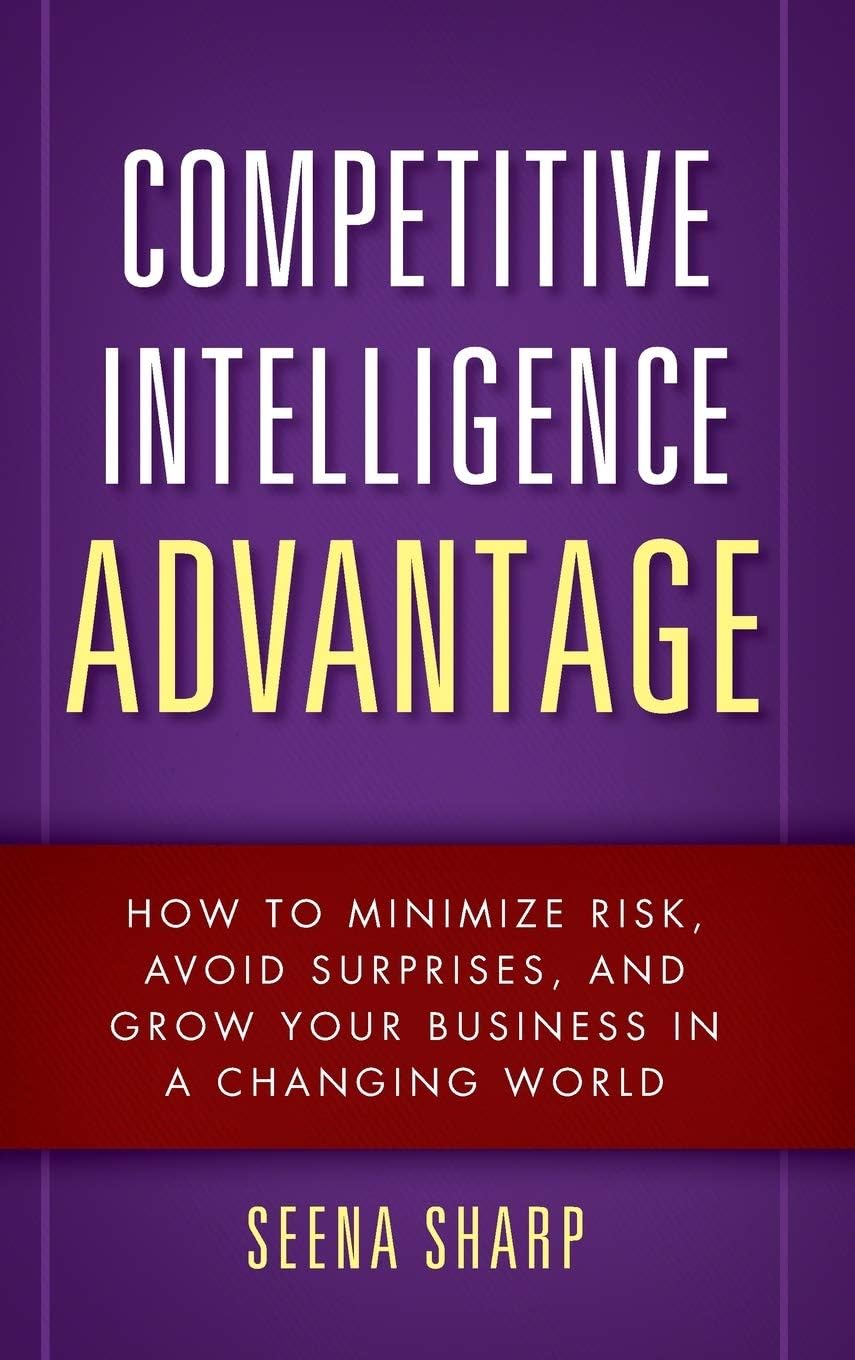
A practical introduction to the necessity of competitive intelligence for smarter business decisions-from a leading CI expert and speaker In Competitive Intelligence Advantage, Seena Sharp, founder of one of the first Competitive Intelligence firms in the US, provides her expert analysis on the issues and benefits of CI for today's businesses. CI is critical for making smarter business decisions and reducing risks when formulating strategies, leading to more profits and fewer mistakes. This is a practical guide that explains what CI is, why data is not intelligence, why competitor intelligence is a weak sibling to competitive intelligence, when to use it, how to find the most useful information and turn it into actual intelligence, and how to present findings in the most convincing manner. Importantly, Sharp argues that businesses would benefit from shifting their perspective on CI from viewing it as a cost to viewing it as an investment that saves money and provides immediate value. Author Seena Sharp is a noted CI expert who established Sharp Market Intelligence in 1979 Addresses all the most common myths and misconceptions about CI Includes more than sixty examples of when to use CI Completely explains the ins and outs of CI, and why your company will act faster and more aggressively with CI Competitive intelligence is a management tool that is misunderstood and underestimated, yet results in numerous benefits. If you are a senior level executive or operate a business-and you aren't tapping the power of CI to improve your decision making-you are missing a potent advantage. Review: Excellent read for anyone (even remotely) interested in Competitive Intelligence - Seena Sharp truly is a thought leader on Competitive Intelligence (CI) and definitely one of the best authors of this moment on the profession. She proves this with her book, Competitive Intelligence Advantage, in which she continuously stresses the importance of actionable knowledge regarding a company's competitive landscape. She emphasizes the scope of CI and clearly explains the difference between CI and for instance market research, marketing intelligence and other related professions. By doing this she contributes to branding CI with great authority. In fact, one might even say Sharp is too keen on underlining the true nature of the profession by constantly emphasizing what Competitive Intelligence is - and is not. It is almost as if she is convinced the reader is in total disagreement. Be that as it may, the bottom line is that in the end she makes sure you agree with her. Sharp teaches us quite some useful lessons in the course of the book. For one, she clearly demonstrates that for a proper CI system the whole competitive landscape should be watched. Not just customers (but she does mention this factor to be the first priority), especially not just competitors. All external factors that influence a company, directly or indirectly, should be considered. Other lessons include the emphasis on the present and (near) future rather than the (distant) past and the fact that if no action is taken as a result of the gathered competitive intelligence, you might as well not bother at all. Sharp offers many pearls of wisdom regarding the value of CI, if and when conducted properly. At the halfway mark of her book, Sharp shifts the scope from `why' to `how'. It is almost like an entirely different book from this stage on, the tone changing from a scientific lecture on the profession - thoroughly substantiated with a large number of cases (clearly displaying Sharp's wealth of experience) - to an extremely practical how-to guide to CI (in less than a day). The wide variety of practical (but slightly incoherent) tips and tricks will certainly be of help should you be in need of it in that particular area. But it almost seems as if Sharp wants to share everything she found out about the practical side of CI, without forging it into a process structure (or any other type of structure for that matter). The chapters move from a practical questionnaire for the sake of inspiration (questions a company could ask as a starting point for CI) to a chapter about what information sources can be found and where, to yet another chapter about ethics. All very useful, no doubt about that, but in a next issue I think it would be good to structure them by means of for instance the intelligence cycle. And then, amidst the tips and tricks, Sharp suddenly shifts back to a chapter about myths (reasons why CI is not important, profitable, worth the effort, etc.), where she once again creates an opportunity to flee in explaining the `why' part, because that seems to be her comfort zone. Conclusion As a relatively seasoned CI professional, I found Seena Sharp's book, Competitive Intelligence Advantage, to be great reading material. Even if you do not (always) agree with her, it is great to match your thoughts with the broad experience and knowledge Sharp displays in her book. This makes Sharp and her book excellent sparring partners for anyone interested in CI. The first half of the book is not so much a `how to' for CI. Instead, Sharp emphasizes the value of CI, focusing on the `why'. The second half on the other hand is a rich collection of practical, more practical and extremely practical tips for anyone practitioning CI. For me personally, the first half of the book benefited me most. Sharp helped sharpen the boundaries of my personal definition of CI. The way Sharp describes the differences between CI and related fields such as market research helped me `sell' the value of CI. But more importantly, her book has been a real eye opener on several occasions. For example when she provokingly states - bluntly against the opinion of many - that competitors are the least important external factor, she triggered me to (re)think this over, and convinced me that in fact she is right about this. For opportunities come from change, not from competitors. Review: Improve Your Company's Competitive Advantage - Seena Sharp provides incredible wisdom around the practice of competitive intelligence and draws upon her wisdom from over 30 years experience. Seena defines competitive intelligence (CI), an unfortunate word combination which is why I believe it's made such poor inroads as a commonly practiced and understood discipline. There are relatively few CI degree programs globally and many schools, including leading MBA programs don't include much CI instruction in their curriculum. Executives like most people misunderstand CI and often focus on monitoring competitors, a subset of competitive intelligence which should include a robust external dive into all the factors which can affect your company's success -- starting with your customers. Too many executives claim to know what customers want better than the customer, and don't listen or query. While customers can't always articulate their needs using your company's products, it's up to you to figure out and develop products or services that will solve customer's problems in these changing times. In this vein, I loved desertcart's Jeff Bezos' attitude, "Figure out what they (customers) want and figure out a way to do it." Let's face it you want to sell more to your customers and grow your customer base. If you can learn enough to think like your customer, and recognize market changes and develop opportunities to meet or exceed your customer's needs, you will maintain a competitive advantage. But if you just look into the rear view mirror at your competitors and ignore looking forward and improving your customer's experience with your products and services, you will lose market share. Seena correctly defines competitive intelligence to include analysis of customers/prospects, buyers, suppliers, distributors/channel, technology, culture, regulation, demographics, the economy, substitutes, other industries and competitors. The book is chock full of examples and case studies on the benefits of using CI, including details supporting each of the components above. Another point Sharp emphasizes is the need to re-examine our assumptions in these changing times. To make this point she quotes Will Rogers, "it ain't what you don't know that gets you into trouble. It's what you know for sure that just ain't so." Likewise, when examining competitors, consider "what they know that you don't" to uncover new markets, applications and customer niches. Remember that your competitor's focus may be different from yours. Their priorities and strategy may be different from yours and they also make mistakes, so be careful what practices you adopt from them. Seena also gives tippers on starting a CI initiative in your company. One of my favorite practices she recommends is: re-evaluate what you "know" every year: question conventional wisdom and the culture behind "this is the way we have always done it." Another is to use customer complaints as an opportunity. In the realm of CI, Sharp focuses on gathering "need to know" rather than "nice to know." In the later chapters of the book, Seena focuses on how to collect CI, ranging from open sources all the way to identifying and querying people sources for collection. I believe that the quality of your answers is directly related to the quality of your questions and CI people need to be persistent in questioning to get at what decision-makers really need. Sharp provides lists of questions for readers starting with good questions to ask about competitors, but also relevant questions to ask by categories like "Tracking Change" and my favorite list on page 163 "Questions a Company Should be Asking Regularly." This list is provocative and gets the reader to reach out for people, relevant information from many sources and question anything that's new or looks odd. Answer the questions on that list, and you will eliminate nasty surprises! CI only produces good news--even when the news is bad and avoids the cost of making ill informed decisions and nasty surprises. In the new world economy can you afford not to conduct CI before making pivotal decisions? What is the cost of NOT having the necessary intelligence for your important decisions? How much does it cost to make a blunder in the marketplace? Read Seena Sharp's book and follow her advice and you will improve your company's competitive advantage!
| Best Sellers Rank | #2,075,334 in Books ( See Top 100 in Books ) #1,481 in Business Management (Books) #1,733 in Strategy & Competition #4,138 in Decision-Making & Problem Solving |
| Customer Reviews | 4.5 out of 5 stars 119 Reviews |
J**K
Excellent read for anyone (even remotely) interested in Competitive Intelligence
Seena Sharp truly is a thought leader on Competitive Intelligence (CI) and definitely one of the best authors of this moment on the profession. She proves this with her book, Competitive Intelligence Advantage, in which she continuously stresses the importance of actionable knowledge regarding a company's competitive landscape. She emphasizes the scope of CI and clearly explains the difference between CI and for instance market research, marketing intelligence and other related professions. By doing this she contributes to branding CI with great authority. In fact, one might even say Sharp is too keen on underlining the true nature of the profession by constantly emphasizing what Competitive Intelligence is - and is not. It is almost as if she is convinced the reader is in total disagreement. Be that as it may, the bottom line is that in the end she makes sure you agree with her. Sharp teaches us quite some useful lessons in the course of the book. For one, she clearly demonstrates that for a proper CI system the whole competitive landscape should be watched. Not just customers (but she does mention this factor to be the first priority), especially not just competitors. All external factors that influence a company, directly or indirectly, should be considered. Other lessons include the emphasis on the present and (near) future rather than the (distant) past and the fact that if no action is taken as a result of the gathered competitive intelligence, you might as well not bother at all. Sharp offers many pearls of wisdom regarding the value of CI, if and when conducted properly. At the halfway mark of her book, Sharp shifts the scope from `why' to `how'. It is almost like an entirely different book from this stage on, the tone changing from a scientific lecture on the profession - thoroughly substantiated with a large number of cases (clearly displaying Sharp's wealth of experience) - to an extremely practical how-to guide to CI (in less than a day). The wide variety of practical (but slightly incoherent) tips and tricks will certainly be of help should you be in need of it in that particular area. But it almost seems as if Sharp wants to share everything she found out about the practical side of CI, without forging it into a process structure (or any other type of structure for that matter). The chapters move from a practical questionnaire for the sake of inspiration (questions a company could ask as a starting point for CI) to a chapter about what information sources can be found and where, to yet another chapter about ethics. All very useful, no doubt about that, but in a next issue I think it would be good to structure them by means of for instance the intelligence cycle. And then, amidst the tips and tricks, Sharp suddenly shifts back to a chapter about myths (reasons why CI is not important, profitable, worth the effort, etc.), where she once again creates an opportunity to flee in explaining the `why' part, because that seems to be her comfort zone. Conclusion As a relatively seasoned CI professional, I found Seena Sharp's book, Competitive Intelligence Advantage, to be great reading material. Even if you do not (always) agree with her, it is great to match your thoughts with the broad experience and knowledge Sharp displays in her book. This makes Sharp and her book excellent sparring partners for anyone interested in CI. The first half of the book is not so much a `how to' for CI. Instead, Sharp emphasizes the value of CI, focusing on the `why'. The second half on the other hand is a rich collection of practical, more practical and extremely practical tips for anyone practitioning CI. For me personally, the first half of the book benefited me most. Sharp helped sharpen the boundaries of my personal definition of CI. The way Sharp describes the differences between CI and related fields such as market research helped me `sell' the value of CI. But more importantly, her book has been a real eye opener on several occasions. For example when she provokingly states - bluntly against the opinion of many - that competitors are the least important external factor, she triggered me to (re)think this over, and convinced me that in fact she is right about this. For opportunities come from change, not from competitors.
E**R
Improve Your Company's Competitive Advantage
Seena Sharp provides incredible wisdom around the practice of competitive intelligence and draws upon her wisdom from over 30 years experience. Seena defines competitive intelligence (CI), an unfortunate word combination which is why I believe it's made such poor inroads as a commonly practiced and understood discipline. There are relatively few CI degree programs globally and many schools, including leading MBA programs don't include much CI instruction in their curriculum. Executives like most people misunderstand CI and often focus on monitoring competitors, a subset of competitive intelligence which should include a robust external dive into all the factors which can affect your company's success -- starting with your customers. Too many executives claim to know what customers want better than the customer, and don't listen or query. While customers can't always articulate their needs using your company's products, it's up to you to figure out and develop products or services that will solve customer's problems in these changing times. In this vein, I loved Amazon's Jeff Bezos' attitude, "Figure out what they (customers) want and figure out a way to do it." Let's face it you want to sell more to your customers and grow your customer base. If you can learn enough to think like your customer, and recognize market changes and develop opportunities to meet or exceed your customer's needs, you will maintain a competitive advantage. But if you just look into the rear view mirror at your competitors and ignore looking forward and improving your customer's experience with your products and services, you will lose market share. Seena correctly defines competitive intelligence to include analysis of customers/prospects, buyers, suppliers, distributors/channel, technology, culture, regulation, demographics, the economy, substitutes, other industries and competitors. The book is chock full of examples and case studies on the benefits of using CI, including details supporting each of the components above. Another point Sharp emphasizes is the need to re-examine our assumptions in these changing times. To make this point she quotes Will Rogers, "it ain't what you don't know that gets you into trouble. It's what you know for sure that just ain't so." Likewise, when examining competitors, consider "what they know that you don't" to uncover new markets, applications and customer niches. Remember that your competitor's focus may be different from yours. Their priorities and strategy may be different from yours and they also make mistakes, so be careful what practices you adopt from them. Seena also gives tippers on starting a CI initiative in your company. One of my favorite practices she recommends is: re-evaluate what you "know" every year: question conventional wisdom and the culture behind "this is the way we have always done it." Another is to use customer complaints as an opportunity. In the realm of CI, Sharp focuses on gathering "need to know" rather than "nice to know." In the later chapters of the book, Seena focuses on how to collect CI, ranging from open sources all the way to identifying and querying people sources for collection. I believe that the quality of your answers is directly related to the quality of your questions and CI people need to be persistent in questioning to get at what decision-makers really need. Sharp provides lists of questions for readers starting with good questions to ask about competitors, but also relevant questions to ask by categories like "Tracking Change" and my favorite list on page 163 "Questions a Company Should be Asking Regularly." This list is provocative and gets the reader to reach out for people, relevant information from many sources and question anything that's new or looks odd. Answer the questions on that list, and you will eliminate nasty surprises! CI only produces good news--even when the news is bad and avoids the cost of making ill informed decisions and nasty surprises. In the new world economy can you afford not to conduct CI before making pivotal decisions? What is the cost of NOT having the necessary intelligence for your important decisions? How much does it cost to make a blunder in the marketplace? Read Seena Sharp's book and follow her advice and you will improve your company's competitive advantage!
R**L
Practical and relevant, ties into the entire business process
This book is rare among competitive intelligence books. It not only provides practical approaches to competitive intelligence and the resulting analysis, but the why? So often I run into CI professionals that don't see the bigger picture. Without having that strategic compass to guide the CI efforts your just collecting data. Seena spends some time up front defining what CI is and what it is not--pay attention because she narrows down the definition and eliminates activities that are not CI. This is important because if you can't get that right you lose the leverage that CI provides. Scattered with real world examples to drive home important points, this book quickly became one of my favorites. I have it on my Kindle so I can refer back to parts, and have it on hand for discussions.
W**U
Interesting and Useful
I am a Senior Finance Manager and was looking for information to help me build a competitive intelligence team for my company. I have bought and read many competitive and business intelligence books, and this book is one of the best. The content is not only about the "what" of CI but also has solid examples and resources for how to solve certain problems. As someone who is responsible for implementing projects, the "How" is much more valuable than the "What". I particularly like some of the websites and resource she recommended for doing CI investigation. For example, recently I was helping a friend prepare for a job interview for a CFO position. He wanted to get information on the CEO before the interview, but unfortunately the company is a private family owned business and the CEO is very private, so he doesn't have a Linkedin account and searches on the web found nothing. Only after two days of investigating did I manage to find an article about the CEO in a local High School newspaper. He had given a speech about how to run a successful business. In the speech, he provided the students some background information about himself such as schooling and interests. This was exactly what my friend was looking for to help him prepare for the job interview. This book is also very well written and has good stories, so reading it was quick and enjoyable. If you are really interested in developing CI models, I also highly recommend the book: Business and Competitive Analysis Effective Application of New and Classic Method by Craig S. Fleisher and Babette E. Bensoussan. Unlike this book, it is not one you can read before bedtime and most of the information is the "What", but regardless, a great reference book for different strategic business models.
Z**Y
Best starting point for learning competitive intelligence
Seena Sharp's book is the best starting point for learning the competitive intelligence field. One of the reasons why this is a fundamental book for understanding the field is because it integrates other fields that have been traditionally thought of as outside the scope of "competitive intelligence". Even her initial definition of competitive intelligence has a stronger integrative focus than most traditional definitions: competitive intelligence is "knowledge and foreknowledge about the entire business environment that results in action". In other words, there is no exclusive obsession about competitors in the definition. Actionable knowledge about the entire environment is what really counts for maintaining the competitiveness of a business, especially since your competitors could be just as lost as you are in finding the right path to success. Seena emphasizes the importance throughout the book of integrating consumer research, economic analysis, cross-industry perspectives and other analysis into the traditional focus on analyzing competitors. She also cites many useful and recent examples both in her consulting practice and in recent events about the applied use of competitive intelligence, including during recessions. The insights even in the first chapter about the common mistakes that executives make in managing a business are worth the price of the book alone. She also defines the differences between data, information and intelligence, and clarifies the differences between fields often associated with competitive intelligence such as marketing research and the IT-oriented field of business intelligence. Seena's book is a very refreshing overview that the field of competitive intelligence is desperately in need of. I've read numerous books about competitive intelligence but few books are as understandable and pragmatic as Seena's about how to integrate competitive intelligence into the minds of executives. Few companies have given competitive intelligence a serious focus, especially since the field has been closely identified with competitor analysis instead of motivating executives to take insightful actions in managing the entire business. The field of competitive intelligence needs to move beyond a close focus on competitive war gaming and focus more on customer needs and cross-industry analysis, and Seena builds a strong foundation for that. Hopefully we'll see more books from her in the future!
J**R
A Keeper and Well Worth The Price
When reading the book I remember thinking, yes- this is a keeper, its has several unique insights, and its definitely worth buying. Its certainly an excellent book for any business professional seeking to learn more about competitive intelligence (and why it continues to merit increasing attention). And as someone involved in CI, the book reminds me of why I became interested in the field. Ms Sharp suffuses her thorough explanations of how, when, and why competitive intelligence works with many excellent and practical examples. She never wavers from understanding that her audience's focus is upon attaining competitive advantage. For example, even her definition of Competitive Intelligence--"Competitive Intelligence is knowledge and foreknowledge about the entire business environment that results in action"-- is carefully parsed in practical "bottom line" terms. Thus, for instance "ENTIRE constitutes the wide range of components or factors that can impact the success of your business. An all-embracing view of the entire landscape is necessary to understand the company's industry or external constituents that contribute to success or failure. Components that affect your business includes customers, distributors, suppliers, technology, societal changes, government regulations..[etc]. and "ACTION denotes a decision that must result from this new learning. Without an action based on the results of CI, the information becomes "nice to know." Few people in business today can afford the merely nice to know, unless you are seeking only to be educated." Hooray for all that- this parsing reveals a straightforward and refreshing view of CI devoid of theoretical pretense! As the book unfolds, readers will come to understand why competitive intelligence is critically important to executive decision-makers (its all about mitigating risk!). And indeed, the end result of intelligence is often a well-reasoned perspective that provides decision-makers with the confidence to act. Congratulations to Seena Sharp for providing such a worthwhile book on competitive intelligence to the general business world.
R**T
Fantastic read and lots of great follow on references.
I really enjoyed reading this book, it covers all of the basics and goes into more advanced topics very seamlessly. For somebody that knew relatively little about the subject I now feel like I can hold down a relatively intelligent conversation with people about it and apply it in my own work in some small way.
J**A
Strong case for leveraging CI
I purchased this book after hearing an interview* with the author Seena Sharp and became interested in learning more about CI. Although I had heard some of the terms before, I never really distinguished between "market research", "market intelligence" and some of the other jargon thrown around in the business world. The author clearly explains each of these concepts using lots of credible examples and succeeds in building a strong case for leveraging CI. The initial comparison with "financial due diligence" was especially helpful in understanding the strategic value of "market intelligence". Key takeaway: "competitive" intelligence is not "competitor" intelligence. Focusing on competitors is much less important than understanding the overall market factors. At the execution level, the author emphasizes and effectively demonstrates the importance of capturing what's currently changing and emerging in the market vs. focusing mainly on historical data and past experiences. I really liked hearing about how CI practitioners research and analyze multiple sources and types of current information to develop a picture of what businesses need to know about the future. Considering myself fairly curious and analytical, I found the concept of CI detective work quite appealing given the added challenge of figuring out what may happen in the future compared with a criminal detective gathering evidence on what has already happened. The author underscored this well by emphasizing the practice of speaking only with current employees of an organization when seeking input. Also, the example of the local Daily Breeze paper covering the auto industry more in-depth that the LA Times effectively demonstrated the value of gathering intelligence from multiple disparate (non-Google) sources. Another point that came across well was the importance of understanding "business" concepts, especially when gathering information from experts. More importantly, defining the purpose of a CI engagement at the outset by asking the question "what business problem are we trying to solve?" is they key to getting started and ensuring a successful outcome for any types of organization, including non-profits, educational institutions, etc. I recommend this book to anyone interested in learning more about CI, to managers looking to better understand the competitive environment (not just their competitors) in their industry, and also anyone researching a prospective employer, business partner, etc. The author's straightforward, positive tone made it easy to understand and become very familiar with what I thought would be a somewhat dry, albeit critically important, business topic. *Interview with Seena Sharp can be found at [...]
A**4
Five Stars
Excellent condition
C**U
très convaincant!
Seena est une adepte passionnée et convaincue de l'intelligence économique. Son livre est trés interressant et comprend des exemples très parlant.
V**A
Five Stars
Love it
S**D
Lots of useful information
This book provides a very good overview into the key elements of competitive intelligence, when to employ it, and how to use the intelligence gathered. It also provides numerous real-life examples to support and illuminate the author's key points. While it does not cover key analytical CI tools, Chapter 9 usefully evaluates different information sources. I would recommend reading this book in conjunction with the classic Creating Market Insight: How Firms Create Value from Market Understanding, Smith & Raspin (2008) for the complementary subject of obtaining key insights from competitive and market research.
A**K
Good overview of competitive intelligence/market intelligence for beginners
This book is not full of detailed tactics but really does an amazing job of giving an overview of competitive intelligence/market intelligence for beginners. Seena is a wonderful writer and peppers the material with insights that show her decades of experience. I've worked in the field for many years so I didn't learn a lot that was new but it gave me some good ideas on how to frame what I do for people who aren't familiar with Market Intelligence. Thank you, Seena!
Trustpilot
3 days ago
2 days ago