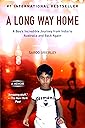
A Long Way Home: A Memoir
Product ID: 16564899
Desertcart purchases this item on your behalf and handles shipping, customs, and support to Belgium.
First it was a media sensation. Then it became the New York Times bestseller and #1 international bestseller A Long Way Home . Now it’s Lion , the major motion picture starring Dev Patel, Nicole Kidman, and Rooney Mara—nominated for six Academy Awards! This is the miraculous and triumphant story of Saroo Brierley, a young man who used Google Earth to rediscover his childhood life and home in an incredible journey from India to Australia and back again... At only five years old, Saroo Brierley got lost on a train in India. Unable to read or write or recall the name of his hometown or even his own last name, he survived alone for weeks on the rough streets of Calcutta before ultimately being transferred to an agency and adopted by a couple in Australia. Despite his gratitude, Brierley always wondered about his origins. Eventually, with the advent of Google Earth, he had the opportunity to look for the needle in a haystack he once called home, and pore over satellite images for landmarks he might recognize or mathematical equations that might further narrow down the labyrinthine map of India. One day, after years of searching, he miraculously found what he was looking for and set off to find his family. A Long Way Home is a moving, poignant, and inspirational true story of survival and triumph against incredible odds. It celebrates the importance of never letting go of what drives the human spirit: hope. Review: sad, heartwarming - Terrifying, sad, heartwarming, inspirational. These are words that describe the amazing story of Saroo Brierley. Saroo is an Indian born Australian businessman who was separated from his family at the age of five. Saroo was born in a small suburb of Khandwa, India called Ganesh Talai, which was an important place for him all his life including when he would initiate the long and tiresome search for his mother. A memoir of this account of his experiences was published in 2013 and called A Long Way Home. I remember hearing about this story a few years ago, when it broke on national television. It was a headline stating that a man had found his mother after 25 long years of separation. I had already known the basic frame of the story, so when I read the book it was very enjoyable getting details about what I had already known. Although this story wasn’t written by Saroo himself, ghost writer Larry Buttrose did an exceptional job at capturing the emotion and details of the journey. This story is one about the journey of a little boy who’s lost his family and doesn’t know how to get back to them. Saroo Brierley was only five years old when he had to endure the hardest challenge of his life. When Saroo’s father abandoned his family for another woman, Saroo was forced to move from the Hindi side of India to the Muslim side and met with terrible living conditions. A poverty-stricken neighborhood, with a mud house and the only form of electricity coming from a candle, Saroo’s family had to work very hard to support each other. Saroo’s mother Kamla would spend 6 days a week, gone all day collecting rocks for the village to support her family. This was hard and physical work that only a strong woman could endure. While reading this memoir, it was easy to see how strong Kamla really was, both emotionally and physically. Having to physically support the family and endure the loss of her son for 25 years, it became hard not to appreciate her efforts to keep her family strong. Although Kamla worked so hard to support Saroo and his brothers, it just wasn’t enough. Guddu, the eldest brother, went to work every day, washing dishes for many hours just to make only half a rupee. Anyhow, Saroo and his family ultimately resorted to begging for money at local markets, railways, and neighborhoods. Although this was a difficult time, there were moments that Saroo looked back on with attachment. These moments included playing with his brothers and sister. The author did a good job showing his appreciation for his older brother Guddu by adding little anecdotes about their good times. The journey took off when Saroo was going to work with Guddu. Guddu left him so he could work his shift and after that Saroo would not see his hometown of Ganesh Talai again for 25 years. It was truly amazing how he was able to find his way back to a place that he had no real memory of. Family was there for Saroo when times were tough, and it was clear that the importance of family was one of the main themes in this memoir. The author did an exceptional job at showing how much his family did to be able to support him by using many examples of his mother and brothers going out for long work days even if it meant earning enough to buy a simple loaf of bread. When reading this memoir, you can notice that Saroo constantly mentions how much he loves his family, and what they mean to him. “We all reach a point as young adults when we wonder what we should be doing with our lives—or, at the very least, which direction to point ourselves in. Beyond the means to get by, we need to think about what’s most important to us. Not surprisingly, I discovered that for me the answer was family.” As much as this memoir was about Saroo and his journey, much of this memoir was dedicated to his adoptive family. The author emphasized the importance of his adoptive parents and gave a good idea of what role they played for him following such a tragic loss of his biological family. “Mum and Dad were very affectionate, right from the start, always giving me lots of cuddles and making me feel safe, secure, loved and above all, wanted. That meant a lot for a child like myself”. When Saroo talked about his adoptive parents it was difficult not to get emotional. His stylistic choice when he wrote about his adoptive parents had a very endearing tone to it. You could tell that these people meant a lot to him. As far as the layout of the book, it was very easy to follow as it was chronologically told starting with the earliest days in his childhood, to the separation from his mother and then onward to life with his adoptive parents and finally the search for his biological mother. The way the book was set up into two parts was effective in understanding the story. The author uses the first part of the book to explain the journey from his hometown to Australia and his adjustment to his new life while the second part is solely about the search for his old home. Personally, I felt that this was a good way to have divided the memoir as it allowed me to keep track with the story and understand it better. What struck me most about this memoir was how the author was able to take a tragic experience and truly connect with the reader on an emotional level. The way the author was able to take his story and make something out of it was remarkable. When I was five years old, I was in my playroom enjoying the company of action figures and toy blocks. The author was able to make me feel guilty for having such a good life by showing the struggle of this five-year-old boy losing his family with no money, no one to talk to and no way of how to find himself home. This story was truly inspirational, one of a kind of a kind and I would recommend it to anyone who loves a great read. Review: An amazing (true) story - I remember being 5 yrs old and I think it would have killed me to find myself alone in a huge city like Saroo did. This is an amazing story of his survival, adoption in Australia and his eventual reunification with his family in India. This true story kept me on the edge of my seat throughout and in the end left me with joy in my heart! In the end many lives in India and Australia were enriched because of Saroo's adoptive parent's selfless decision to adopt, educate and nuture a needy child. As well as a compelling story, the book is well written. I will admit, I skimmed through one section about 1/3 of the way through. I don't know if it was an issue too heavily dwelt upon or my weak and pampered life. I couldn't take hearing again and again of the reality of 5 yr old Saroo's hunger and total destitude situation. I ached too much for the little boy. I would love to see the movie and I definitely recommend the book.
| Best Sellers Rank | #45,104 in Books ( See Top 100 in Books ) #4 in General India Travel Guides #13 in Adoption (Books) #153 in Travelogues & Travel Essays |
| Customer Reviews | 4.5 out of 5 stars 15,186 Reviews |
A**N
sad, heartwarming
Terrifying, sad, heartwarming, inspirational. These are words that describe the amazing story of Saroo Brierley. Saroo is an Indian born Australian businessman who was separated from his family at the age of five. Saroo was born in a small suburb of Khandwa, India called Ganesh Talai, which was an important place for him all his life including when he would initiate the long and tiresome search for his mother. A memoir of this account of his experiences was published in 2013 and called A Long Way Home. I remember hearing about this story a few years ago, when it broke on national television. It was a headline stating that a man had found his mother after 25 long years of separation. I had already known the basic frame of the story, so when I read the book it was very enjoyable getting details about what I had already known. Although this story wasn’t written by Saroo himself, ghost writer Larry Buttrose did an exceptional job at capturing the emotion and details of the journey. This story is one about the journey of a little boy who’s lost his family and doesn’t know how to get back to them. Saroo Brierley was only five years old when he had to endure the hardest challenge of his life. When Saroo’s father abandoned his family for another woman, Saroo was forced to move from the Hindi side of India to the Muslim side and met with terrible living conditions. A poverty-stricken neighborhood, with a mud house and the only form of electricity coming from a candle, Saroo’s family had to work very hard to support each other. Saroo’s mother Kamla would spend 6 days a week, gone all day collecting rocks for the village to support her family. This was hard and physical work that only a strong woman could endure. While reading this memoir, it was easy to see how strong Kamla really was, both emotionally and physically. Having to physically support the family and endure the loss of her son for 25 years, it became hard not to appreciate her efforts to keep her family strong. Although Kamla worked so hard to support Saroo and his brothers, it just wasn’t enough. Guddu, the eldest brother, went to work every day, washing dishes for many hours just to make only half a rupee. Anyhow, Saroo and his family ultimately resorted to begging for money at local markets, railways, and neighborhoods. Although this was a difficult time, there were moments that Saroo looked back on with attachment. These moments included playing with his brothers and sister. The author did a good job showing his appreciation for his older brother Guddu by adding little anecdotes about their good times. The journey took off when Saroo was going to work with Guddu. Guddu left him so he could work his shift and after that Saroo would not see his hometown of Ganesh Talai again for 25 years. It was truly amazing how he was able to find his way back to a place that he had no real memory of. Family was there for Saroo when times were tough, and it was clear that the importance of family was one of the main themes in this memoir. The author did an exceptional job at showing how much his family did to be able to support him by using many examples of his mother and brothers going out for long work days even if it meant earning enough to buy a simple loaf of bread. When reading this memoir, you can notice that Saroo constantly mentions how much he loves his family, and what they mean to him. “We all reach a point as young adults when we wonder what we should be doing with our lives—or, at the very least, which direction to point ourselves in. Beyond the means to get by, we need to think about what’s most important to us. Not surprisingly, I discovered that for me the answer was family.” As much as this memoir was about Saroo and his journey, much of this memoir was dedicated to his adoptive family. The author emphasized the importance of his adoptive parents and gave a good idea of what role they played for him following such a tragic loss of his biological family. “Mum and Dad were very affectionate, right from the start, always giving me lots of cuddles and making me feel safe, secure, loved and above all, wanted. That meant a lot for a child like myself”. When Saroo talked about his adoptive parents it was difficult not to get emotional. His stylistic choice when he wrote about his adoptive parents had a very endearing tone to it. You could tell that these people meant a lot to him. As far as the layout of the book, it was very easy to follow as it was chronologically told starting with the earliest days in his childhood, to the separation from his mother and then onward to life with his adoptive parents and finally the search for his biological mother. The way the book was set up into two parts was effective in understanding the story. The author uses the first part of the book to explain the journey from his hometown to Australia and his adjustment to his new life while the second part is solely about the search for his old home. Personally, I felt that this was a good way to have divided the memoir as it allowed me to keep track with the story and understand it better. What struck me most about this memoir was how the author was able to take a tragic experience and truly connect with the reader on an emotional level. The way the author was able to take his story and make something out of it was remarkable. When I was five years old, I was in my playroom enjoying the company of action figures and toy blocks. The author was able to make me feel guilty for having such a good life by showing the struggle of this five-year-old boy losing his family with no money, no one to talk to and no way of how to find himself home. This story was truly inspirational, one of a kind of a kind and I would recommend it to anyone who loves a great read.
B**A
An amazing (true) story
I remember being 5 yrs old and I think it would have killed me to find myself alone in a huge city like Saroo did. This is an amazing story of his survival, adoption in Australia and his eventual reunification with his family in India. This true story kept me on the edge of my seat throughout and in the end left me with joy in my heart! In the end many lives in India and Australia were enriched because of Saroo's adoptive parent's selfless decision to adopt, educate and nuture a needy child. As well as a compelling story, the book is well written. I will admit, I skimmed through one section about 1/3 of the way through. I don't know if it was an issue too heavily dwelt upon or my weak and pampered life. I couldn't take hearing again and again of the reality of 5 yr old Saroo's hunger and total destitude situation. I ached too much for the little boy. I would love to see the movie and I definitely recommend the book.
S**R
Lion is the movie you've heard about - but the book is amazing too.
I wanted to read the book before going to see the movie "Lion". So this weekend, it's what I did. Like most people are saying ....it's just a beautiful story. No way else to describe it from start to finish. First off I want to say that the fascinating thing to me was the intelligence of this man (when he was only 5 yrs old). And his memory! Not many people could have survived on their own for weeks as a 5 yr old. But then to be able to remember all these things for all those years is incredible. Being adopted is hard enough. Even if you had the very best adoptive parents...which it sounds like he did. Relocating to a new country so many thousands of miles away is another thing. For many children it's very traumatizing to switch cultures in that way. The book is half about Saroo when he was little before and after getting lost and half about him as an adult & deciding to search for his family of origins. All that he went through is interesting - but upsetting at the same time (coming from a mother's point of view). I'm also able to relate, having been adopted myself. But my adoption story is nothing like his. I was an infant & stayed in my home country. I think for anybody that's in the adoption triangle (birth family, adoptive family & adoptee) this book is very valuable. However, for those who've really never thought about adoption at all; it's a huge eye opener. So I can't think of anybody not enjoying this story or learning something from it. It was published in 2014 - so a few years have passed. I wonder how long it took them to make the movie since that's just now coming out in 2017? Sounds like it all happened pretty fast. Sometimes people go see the movie & never get around or even want to read the book. For me, I think books are generally way better than any movie could be. However, I'll come back & update this once I've viewed the film. Just for the heck of it. People might want to know which is better or if reading the book after seeing the movie is worth it. Anyway, I'm happy for Saroo! He has really taken a long journey in his life (to date) and much more is to come. Maybe one day we'll hear more about his reunion and both families.
J**G
Intriguing Read
I loved this book. I started it after seeing a brief clip about it by the author on Instagram. Couldn't put it down. Very well written and for once when I got to the end every question was answered. Thank you, Saroo!
L**S
Simplistic writing. Movie is better
This book is written in a simplistic style and is too minutely detailed. It could have been 100 pages shorter. It’s an amazing story but the film is better
K**1
Forget the movie pick up the book instead
This book is outstanding. Forget the movie. The movie should be ashamed of itself!!! This book is outstanding. When he talks about his life in India, how he survived on the streets. Its one of the few books I've read where you have no loose ends and all your questions have been answered. He turned out so well. I loved his positive attitude, his love for both his family's. Glad they included some photos and a map of India/Train. So forget the movie pick up the book instead. Go read it, so worth it.
M**M
An amazing true story - beats fiction!
This is such an emotional, touching story and, for me, a more rewarding read than any novel, because it is a true account of extraordinary events in a young man's life. Some other reviews have criticized the quality of the writing and suggested a ghost writer would have made the story more descriptive and compelling. To the contrary, the original voice of the writer, and indeed his less sophisticated writing style, gave a poignancy and authenticity that would otherwise have been lost. Saroo was able to put the reader into his shoes as a five-six year old child, finding himself lost and alone in an unfamiliar, bewildering and dangerous place. He takes the reader through his emotions and the urgent learning process that even at such a young age he realized was essential to survive starvation, homelessness and human predators.... then on through adapting to his adoption and comfortable new life as an Australian. Yes, perhaps as the story moves on the writing becomes somewhat bland at times, but it moved along quickly, so I was never tempted to put the book down. In fact it was worth reading the background building up to Saroo's emotional return as an adult to India to reunite with his long lost family. I would add that I enjoyed Saroo's vivid descriptions of life in rural and urban India, perhaps made more interesting by being first given through the eyes of a small child and later his comparisons when he returns and tries to put his memories and experiences into perspective as an adult. All in all a heartwarming and remarkable story.
G**G
The determination to find his family, and himself
Sheru was a five-year-old boy helping his family live by their wits in a small town in north central India. His father was a Muslim, and had left the family to marry a second wife. His mother was a Hindu, struggling to raise three boys and a girl. Sheru was the youngest of the three boys. He couldn’t quite pronounce his name correctly and so called himself “Saroo.” He had one significant responsibility, other than begging for food and sometimes stealing it: taking care of his little sister while his mother worked carting rocks for a construction crew. His mother would often be gone for three or four days at a time for her job. His older brothers worked, begged, and sometimes stole as well. In search of work, they would often sneak aboard trains to travel to the next town or two down the line. One day, Saroo’s oldest brother took Saroo with him. The little boy was thrilled to go along. When they arrived, his brother tells Saroo to wait at the train station until he returns. He falls asleep on a bench. When he awakens, the station is deserted, and there is no sign of his brother. A train arrives, and the little boy gets in and looks for his brother. He discovers the train car is empty, with barred windows and doors that open only from the outside. And then the train begins to move. “A Long Way Home” is Saroo Brierly’s remarkable and true story of what happened when he boarded that train. The train traveled across India to Calcutta (now called Kolkata). And the five-year-old boy found himself in one of the largest, most densely populated, and most dangerous cities in the world. With only two fragments of information about where his family lived, Saroo would live on the streets of Calcutta for six months, avoid police, child molesters, gangs preying on orphaned and abandoned children, and an always-constant hunger for food. Saroo was eventually befriended by a teenager, taken to the police station, confined to a juvenile facility (along with children like himself, young criminals, and children needing medical care), and then adopted by a couple in Tasmania, the island off the southern coast of Australia. And there he lived, with a bedroom larger than the room his family in India shared and with a real bed, until he reached adulthood and began working with his adopted father in the family business. With the advent of the internet and especially Google Earth, he begins to search for his family in India. It takes years, but the recognition of a water tower in a small town begins the journey home, a journey that ends in finding his birth family. The house they had lived in was abandoned and crumbling, but his mother lived nearby. She insisted on staying near where they had lived because she believed her youngest son would one day come home. And he did. Saroo’s story is a story of desperate and unimaginable poverty, what people do to survive, the love of two families in radically different circumstances, and the determination of a young man to find out what had happened to his brother and his family after that train began to move.
A**R
A MUST READ !!
If you can't get to the movies to see this, make sure you buy this book. What a disturbing, heart wrenching, amazing, uplifting, thought provoking, unforgettable true story. Once you begin reading, you won't put it down !
L**U
Te captura desde la introducción
Me encanto la narración - aunque ya había visto la película me sentí capturada por la historia por que añade muchos detalles y enriquece - se puede poner uno mismo en la posición de Saroo e imaginar ¿como lo hubiera hecho yo?
A**ー
A Veey Good Read!
A very inspiring and impressive story of life, luck, and faith.
T**S
Prima!
Lesenswert!
B**B
una storia incredibile
Ho letto questo libro dopo aver visto il film al cinema perché la storia mi aveva veramente appassionata. Il libro narra gli episodi in maniera più particolareggiata ed aggiunge aspetti che nel film non ci sono (ad esempio l'altro fratello, Kaddu). Ho deciso di leggerlo in inglese proprio per avere un racconto più fedele a quello che Saroo ha voluto realmente esprimere e non ne sono rimasta delusa. Consiglio sia la lettura del libro che la visione del film.
Trustpilot
3 weeks ago
2 months ago