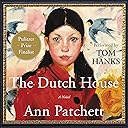

Audiobook performed by Tom Hanks Pulitzer Prize Finalist | New York Times Bestseller | A Read with Jenna Today Show Book Club Pick | A New York Times Book Review Notable Book | TIME Magazine's 100 Must-Read Books of the Year Named one of the Best Books of the Year by NPR, The Washington Post; O: The Oprah Magazine, Real Simple , Good Housekeeping, Vogue , Refinery29 , and Buzzfeed From Ann Patchett, the #1 New York Times bestselling author of Commonwealth, comes a powerful, richly moving story that explores the indelible bond between two siblings, the house of their childhood, and a past that will not let them go. The Dutch House is the story of a paradise lost, a tour de force that digs deeply into questions of inheritance, love and forgiveness, of how we want to see ourselves and of who we really are. At the end of the Second World War, Cyril Conroy combines luck and a single canny investment to begin an enormous real estate empire, propelling his family from poverty to enormous wealth. His first order of business is to buy the Dutch House, a lavish estate in the suburbs outside of Philadelphia. Meant as a surprise for his wife, the house sets in motion the undoing of everyone he loves. The story is told by Cyril’s son Danny, as he and his older sister, the brilliantly acerbic and self-assured Maeve, are exiled from the house where they grew up by their stepmother. The two wealthy siblings are thrown back into the poverty their parents had escaped from and find that all they have to count on is one another. It is this unshakeable bond between them that both saves their lives and thwarts their futures. Set over the course of five decades, The Dutch House is a dark fairy tale about two smart people who cannot overcome their past. Despite every outward sign of success, Danny and Maeve are only truly comfortable when they’re together. Throughout their lives they return to the well-worn story of what they’ve lost with humor and rage. But when at last they’re forced to confront the people who left them behind, the relationship between an indulged brother and his ever-protective sister is finally tested. Review: What a fascinating house, with odd and interesting occupants - I read half of The Dutch House on a Saturday evening and the second half on Sunday. The story was that good, the characters that interesting, the choices they made that captivating. I didn’t want to set it down. I just had to know how things were going to turn out, both for the characters I liked and those I detested. Here are a few thoughts that arose in my mind during the reading of this book (for my book club). When Mauve told her father “You didn’t ask me,” I stopped reading and reread it. And then I read it again. You know, that was the father’s problem. He did things for others and with others without asking them if they wanted to do it in the first place. I didn’t see him ask someone what they wanted, nor of-fer anyone choices between different options. He just directed things as they pertained to his own life path, as if he was al-ways in charge. Like buying the house and presenting it as a gift or magnum opus for his wife to just accept, with no say in the selection as modern couples do. That was just dumb. Sure, it was romantic, but come on. Really? The old days with husbands or fathers deciding, instead of seeing life as a journey with a partner, is just thoughtless to me. I find it hard to understand. So, I liked Danny. This was his story to tell, though I still wonder if this was a story of a person or a house. Let’s see. Danny points out that he was asleep to the world, as a child and young adult and husband. How about as a passenger, or student, or brother, or father? I wonder. There was so much that Danny didn’t see, didn’t ask about, wasn’t curious about. Easily seen things that he was just oblivious to. It doesn’t mean that he was stupid or self-centered, but he just didn’t look at things from someone else’s perspective. He lived life and didn’t question things or see things from other people’s point of view. I blame the father. Danny wasn’t allowed or didn’t know how to talk about women (his mother, sister, stepmother) with his father. How is it that a father (Cyril) could raise a son (Danny) and not give him opportunities to develop a skill at analyzing and talking about the opposite sex? That is just bad parenting. The father is supposed to be developing his son’s mind and preparing him for the future, one in which most sons marry someone and need to understand how to talk with (and dis-agree/argue with) them. He didn’t, and I fault him for that. Of course, the father did impart one useful life trick: “The things we could do nothing about were best put out of your mind.” I like that and try to live by that motto myself. Focus on the things you can change. And, somehow he learned that “You had to touch a hot stove only once.” So true! How many times have I seen someone act in a stupid way, and told myself that they’d never be more than an acquaintance to me, not a friend, not someone I’d choose to hang out with. How did I learn that? And from whom? I don’t know. Not my father. One thing did bother me, though. Danny seemed to re-member many times when his stepmother was kind to him, but he focused too much energy on the times when she wasn’t. He knew that this was not smart or productive, but he did it any-ways. Sure, that is typical of people, forgetting the good and remembering (and focusing on) the bad. It is why kids blame their parents for their own life’s failings and shortcomings. I can’t help it, but certain elements of this story made me think of my own life. I can connect with not having friends come over as a child. Norma and Bright didn’t have visitors, just as Danny and Mauve didn’t have friends over. No one to spend the night, or pretend with, or to run around with in the backyard, or to play hide-and-seek with. So lonely, only adults to communicate with, who seemed to be busy managing life and not imagining life (as kids often do). And when I found out that Kevin loved butterscotch Lifesavers, I smiled, because that is the one flavor I loved as a child. Loved! I have such fond memories of getting it from my grandma (though I didn’t like cherry). Did I tell others this? I don’t think so. I wasn’t allowed to ask for stuff, or encouraged to talk about what made me happy. Again, it’s the life my parents lived, and their choices that I now reflect on. Having a mother who is already dead and a father who will never read what I write, well, I am just talking to myself. And getting married on a sweltering hot July day. Yep, I did that too. It was 108 degrees on my wedding day, outdoors, with lots of family and a few friends sweltering in the heat. And when the father died at age fifty-three, it struck a chord with me, as I am fifty-three right now. No, I don’t expect to die this year. I am in excellent shape and wouldn’t even breathe heavily from climbing three flights of stairs. And being the iron in Monopoly. That was me as a child, every time. I always wanted to be the iron. No one else wanted it. It wasn’t sexy or cool, but I liked it, and how flat it was, and how it couldn’t fall over. And I could slide it. I enjoyed these moments, when my life and the life of the characters in this novel crossed paths. I hated the step-mother for so many reasons, from the earliest moments and almost to the very end. Like, when Sandy and Jocelyn weren’t given the day off to attend the funeral service, but were instead required to work in the kitchen. I was angry. How self-centered and thoughtless of a person this stepmother was. I wonder, did she even ask them if they wanted to help out or not? I doubt it. She constantly bossed people around, both kids and adults, exerting power over others in order to get what she wanted in life. Such a horrible per-son. She got what she deserved. One of her daughters refused to come see her, moving far away, while the other dropped everything and came to her aide in the final years. Would I, if I were that child? Would I quit my job and leave behind my friends, and subject myself to such drudgery for a person who is a self-centered person? Well, I don’t think that this daughter saw her mother in that way. She was loved and got whatever she wanted, so she and I aren’t viewing things from the same place. I’d probably be that other child, living far away. When Danny realized that he had limited real world coping skills because his father had protected him from what the world was capable of, I started thinking about myself. In what way did my father do the same, hiding reality from me, failing to give me coping skills for what life would surely throw at me. Did my own failures in life arise because I wasn’t given the tools as a child and young adult, and no guidance or support system as an adult, no one to talk to, no trusted advisor. I find it ironic that my father advises other people, other couples, and yet he would have been the last person I would ever have consulted on anything in life. I still don’t call him for advice. Ever. I can’t help but wonder if he knows this. It should be normal for a child to trust the opinion and guidance of their parent. I don’t. When Mauve in anger told Danny that the new family had “stolen from us,” I hit the mental pause button. Us? Really? In my mind, the one who did the work and bought the home was the father. He owned the house and its contents, not the kids who lived off of his generosity. When he died, it made sense that everything went to the wife (their stepmother). These two (a young adult and a teenager) mistakenly thought that the house should be theirs. Nope. That’s not how it works. They didn’t work for it or marry someone who had. This expectation that kids have, that their parents’ stuff is their stuff, is just wrong. Sure, you share. And you don’t kick a child out into the street (or to live with his sister). But the step-mother had the right to keep everything in the house. Danny mused about life, his own life, and his wife’s (Celeste), asking whether it really belonged to you, or to your parents and their expectations and hopes. Does a parent have that right, even if they paid for a child’s education, or paid for a car, or helped with a down payment? Do they own that child’s future? I think that kids feel obligated, like they owe their parents after so much is invested in them. But where do you stop here? Where does obligation end and freedom of choice begin? I remember when my father’s expectations of me clashed with my own vision of the future. An ultimatum ended with me walking away from my family, saying goodbye and living on my own. It was painful, but I felt that my life was my own, not only because I was paying for everything I did, but be-cause it was mine to live as I saw fit. They had their chance when they (actually, my father) were my age. I wasn’t using their money to fund my college. I was working while at school, paying for my education entirely on my own, so they didn’t have the right to tell me what to do or how to live my life. Or so I thought. I still dislike the stepmother, Andrea. I can’t see why the father married her in the first place, unless he was truly desperate. Danny wonders this too, and comes to the conclusion that his father must have just been tired of being alone. I think that he was actually unable to finish raising kids alone and manage the house. He wanted someone else to do the job. And he wanted to release some of the burden from the oldest child, Mauve. But what about the mother? It still shocks me that neither child looked for their mother once they became adults. I hear of kids doing that, searching for a parent who abandoned them in childhood, reconnecting. Danny and Mauve weren’t told that their mother was dead, just crazy (by the father). Didn’t they question that, or want to find out more? And the whole keeping it a secret from his sister. Why would Danny do that after talking with Fluffy? He didn’t have that right. Just like the father who made decisions for others without consulting them. Like father, like son. I liked it when Mauve justified her life by saying “I like my job.” Just as she liked her house, and liked her solitude, and liked smoking, and liked checking up on the old house and its occupants. No one had the right to tell her that she wasn’t happy. I connected to this in my own life, as I like my life. When a “friend” tries to get me to do something, thinking that this new event or whatever will make me happy, I just shake my head and move on. I am happy. I don’t want other people to try to “fix” me. I am happy as I am. When Mauve pointed out that she had to choose between feeling angry and bitter or feeling happy and lucky, I liked that. Too often I choose to feel the misery, to relive the past and dwell on how painful an event was instead of just moving on and living in the moment. I think that we all do that. “There is a finite amount of time.” So true! So true. It is stupid to feel anger over something that is now in the past. It makes sense to focus on the present and get the most pleasure out of what it has to offer. I am still kinda annoyed with the mother. She left. But, I know that she was also forced out, by the father, given an ultimatum. Man, what was so wrong with this couple and their life, and their inability to talk it out, or to change course? I must be careful not to superimpose modern ways of coupling with a time in the past, but I can’t help it. It is who I am today. I still remember the early part of the book talking about the past, and how we can never see it as it was because we’re too influenced by the present. So true. I did like how the mother served those who needed to be served, and didn’t just help the ones who make her feel good about herself. It is something to think about, holding both thoughts together in your mind: abandoning the family and helping others. Most people must choose one or the other, to understand her suffering or to blame her for her life path. I think it is wiser to hold both ideas simultaneously, and allow them to exist together. In conclusion, I still wonder about that house. So much in this story is centered around the house. From the beginning until the end, it was a center piece of the story, defining people and the choices they made, mentioned, described, connected. It was both an empty shell in need of people and a house filled with noise. It was both a hive of pain for some and a place of comfort for others. It was a place to hate as well as a place so longingly remembered. Two opposing ideas held at the same time. I found it pleasing to see the house go from a party place before the family moved in for adults, surviving kids, those kids having kids of their own, and then being bought by a kid who reached adulthood and turning it again into a place for parties. turning back into a party place. The house is happy again, filled with a purpose and no longer lonely. I liked the house from the start, and thought how cool it would be to live there. If you want to read a fun book, then this is one you should buy. I did, and I am glad for the experience. Review: Great Story - This is a well written story that touches on many different areas of life stages. I found it a bit slow at times, but overall, it was an enjoyable read.
I**E
What a fascinating house, with odd and interesting occupants
I read half of The Dutch House on a Saturday evening and the second half on Sunday. The story was that good, the characters that interesting, the choices they made that captivating. I didn’t want to set it down. I just had to know how things were going to turn out, both for the characters I liked and those I detested. Here are a few thoughts that arose in my mind during the reading of this book (for my book club). When Mauve told her father “You didn’t ask me,” I stopped reading and reread it. And then I read it again. You know, that was the father’s problem. He did things for others and with others without asking them if they wanted to do it in the first place. I didn’t see him ask someone what they wanted, nor of-fer anyone choices between different options. He just directed things as they pertained to his own life path, as if he was al-ways in charge. Like buying the house and presenting it as a gift or magnum opus for his wife to just accept, with no say in the selection as modern couples do. That was just dumb. Sure, it was romantic, but come on. Really? The old days with husbands or fathers deciding, instead of seeing life as a journey with a partner, is just thoughtless to me. I find it hard to understand. So, I liked Danny. This was his story to tell, though I still wonder if this was a story of a person or a house. Let’s see. Danny points out that he was asleep to the world, as a child and young adult and husband. How about as a passenger, or student, or brother, or father? I wonder. There was so much that Danny didn’t see, didn’t ask about, wasn’t curious about. Easily seen things that he was just oblivious to. It doesn’t mean that he was stupid or self-centered, but he just didn’t look at things from someone else’s perspective. He lived life and didn’t question things or see things from other people’s point of view. I blame the father. Danny wasn’t allowed or didn’t know how to talk about women (his mother, sister, stepmother) with his father. How is it that a father (Cyril) could raise a son (Danny) and not give him opportunities to develop a skill at analyzing and talking about the opposite sex? That is just bad parenting. The father is supposed to be developing his son’s mind and preparing him for the future, one in which most sons marry someone and need to understand how to talk with (and dis-agree/argue with) them. He didn’t, and I fault him for that. Of course, the father did impart one useful life trick: “The things we could do nothing about were best put out of your mind.” I like that and try to live by that motto myself. Focus on the things you can change. And, somehow he learned that “You had to touch a hot stove only once.” So true! How many times have I seen someone act in a stupid way, and told myself that they’d never be more than an acquaintance to me, not a friend, not someone I’d choose to hang out with. How did I learn that? And from whom? I don’t know. Not my father. One thing did bother me, though. Danny seemed to re-member many times when his stepmother was kind to him, but he focused too much energy on the times when she wasn’t. He knew that this was not smart or productive, but he did it any-ways. Sure, that is typical of people, forgetting the good and remembering (and focusing on) the bad. It is why kids blame their parents for their own life’s failings and shortcomings. I can’t help it, but certain elements of this story made me think of my own life. I can connect with not having friends come over as a child. Norma and Bright didn’t have visitors, just as Danny and Mauve didn’t have friends over. No one to spend the night, or pretend with, or to run around with in the backyard, or to play hide-and-seek with. So lonely, only adults to communicate with, who seemed to be busy managing life and not imagining life (as kids often do). And when I found out that Kevin loved butterscotch Lifesavers, I smiled, because that is the one flavor I loved as a child. Loved! I have such fond memories of getting it from my grandma (though I didn’t like cherry). Did I tell others this? I don’t think so. I wasn’t allowed to ask for stuff, or encouraged to talk about what made me happy. Again, it’s the life my parents lived, and their choices that I now reflect on. Having a mother who is already dead and a father who will never read what I write, well, I am just talking to myself. And getting married on a sweltering hot July day. Yep, I did that too. It was 108 degrees on my wedding day, outdoors, with lots of family and a few friends sweltering in the heat. And when the father died at age fifty-three, it struck a chord with me, as I am fifty-three right now. No, I don’t expect to die this year. I am in excellent shape and wouldn’t even breathe heavily from climbing three flights of stairs. And being the iron in Monopoly. That was me as a child, every time. I always wanted to be the iron. No one else wanted it. It wasn’t sexy or cool, but I liked it, and how flat it was, and how it couldn’t fall over. And I could slide it. I enjoyed these moments, when my life and the life of the characters in this novel crossed paths. I hated the step-mother for so many reasons, from the earliest moments and almost to the very end. Like, when Sandy and Jocelyn weren’t given the day off to attend the funeral service, but were instead required to work in the kitchen. I was angry. How self-centered and thoughtless of a person this stepmother was. I wonder, did she even ask them if they wanted to help out or not? I doubt it. She constantly bossed people around, both kids and adults, exerting power over others in order to get what she wanted in life. Such a horrible per-son. She got what she deserved. One of her daughters refused to come see her, moving far away, while the other dropped everything and came to her aide in the final years. Would I, if I were that child? Would I quit my job and leave behind my friends, and subject myself to such drudgery for a person who is a self-centered person? Well, I don’t think that this daughter saw her mother in that way. She was loved and got whatever she wanted, so she and I aren’t viewing things from the same place. I’d probably be that other child, living far away. When Danny realized that he had limited real world coping skills because his father had protected him from what the world was capable of, I started thinking about myself. In what way did my father do the same, hiding reality from me, failing to give me coping skills for what life would surely throw at me. Did my own failures in life arise because I wasn’t given the tools as a child and young adult, and no guidance or support system as an adult, no one to talk to, no trusted advisor. I find it ironic that my father advises other people, other couples, and yet he would have been the last person I would ever have consulted on anything in life. I still don’t call him for advice. Ever. I can’t help but wonder if he knows this. It should be normal for a child to trust the opinion and guidance of their parent. I don’t. When Mauve in anger told Danny that the new family had “stolen from us,” I hit the mental pause button. Us? Really? In my mind, the one who did the work and bought the home was the father. He owned the house and its contents, not the kids who lived off of his generosity. When he died, it made sense that everything went to the wife (their stepmother). These two (a young adult and a teenager) mistakenly thought that the house should be theirs. Nope. That’s not how it works. They didn’t work for it or marry someone who had. This expectation that kids have, that their parents’ stuff is their stuff, is just wrong. Sure, you share. And you don’t kick a child out into the street (or to live with his sister). But the step-mother had the right to keep everything in the house. Danny mused about life, his own life, and his wife’s (Celeste), asking whether it really belonged to you, or to your parents and their expectations and hopes. Does a parent have that right, even if they paid for a child’s education, or paid for a car, or helped with a down payment? Do they own that child’s future? I think that kids feel obligated, like they owe their parents after so much is invested in them. But where do you stop here? Where does obligation end and freedom of choice begin? I remember when my father’s expectations of me clashed with my own vision of the future. An ultimatum ended with me walking away from my family, saying goodbye and living on my own. It was painful, but I felt that my life was my own, not only because I was paying for everything I did, but be-cause it was mine to live as I saw fit. They had their chance when they (actually, my father) were my age. I wasn’t using their money to fund my college. I was working while at school, paying for my education entirely on my own, so they didn’t have the right to tell me what to do or how to live my life. Or so I thought. I still dislike the stepmother, Andrea. I can’t see why the father married her in the first place, unless he was truly desperate. Danny wonders this too, and comes to the conclusion that his father must have just been tired of being alone. I think that he was actually unable to finish raising kids alone and manage the house. He wanted someone else to do the job. And he wanted to release some of the burden from the oldest child, Mauve. But what about the mother? It still shocks me that neither child looked for their mother once they became adults. I hear of kids doing that, searching for a parent who abandoned them in childhood, reconnecting. Danny and Mauve weren’t told that their mother was dead, just crazy (by the father). Didn’t they question that, or want to find out more? And the whole keeping it a secret from his sister. Why would Danny do that after talking with Fluffy? He didn’t have that right. Just like the father who made decisions for others without consulting them. Like father, like son. I liked it when Mauve justified her life by saying “I like my job.” Just as she liked her house, and liked her solitude, and liked smoking, and liked checking up on the old house and its occupants. No one had the right to tell her that she wasn’t happy. I connected to this in my own life, as I like my life. When a “friend” tries to get me to do something, thinking that this new event or whatever will make me happy, I just shake my head and move on. I am happy. I don’t want other people to try to “fix” me. I am happy as I am. When Mauve pointed out that she had to choose between feeling angry and bitter or feeling happy and lucky, I liked that. Too often I choose to feel the misery, to relive the past and dwell on how painful an event was instead of just moving on and living in the moment. I think that we all do that. “There is a finite amount of time.” So true! So true. It is stupid to feel anger over something that is now in the past. It makes sense to focus on the present and get the most pleasure out of what it has to offer. I am still kinda annoyed with the mother. She left. But, I know that she was also forced out, by the father, given an ultimatum. Man, what was so wrong with this couple and their life, and their inability to talk it out, or to change course? I must be careful not to superimpose modern ways of coupling with a time in the past, but I can’t help it. It is who I am today. I still remember the early part of the book talking about the past, and how we can never see it as it was because we’re too influenced by the present. So true. I did like how the mother served those who needed to be served, and didn’t just help the ones who make her feel good about herself. It is something to think about, holding both thoughts together in your mind: abandoning the family and helping others. Most people must choose one or the other, to understand her suffering or to blame her for her life path. I think it is wiser to hold both ideas simultaneously, and allow them to exist together. In conclusion, I still wonder about that house. So much in this story is centered around the house. From the beginning until the end, it was a center piece of the story, defining people and the choices they made, mentioned, described, connected. It was both an empty shell in need of people and a house filled with noise. It was both a hive of pain for some and a place of comfort for others. It was a place to hate as well as a place so longingly remembered. Two opposing ideas held at the same time. I found it pleasing to see the house go from a party place before the family moved in for adults, surviving kids, those kids having kids of their own, and then being bought by a kid who reached adulthood and turning it again into a place for parties. turning back into a party place. The house is happy again, filled with a purpose and no longer lonely. I liked the house from the start, and thought how cool it would be to live there. If you want to read a fun book, then this is one you should buy. I did, and I am glad for the experience.
C**Y
Great Story
This is a well written story that touches on many different areas of life stages. I found it a bit slow at times, but overall, it was an enjoyable read.
S**S
There are not enough superlatives for this book!
I have loved all of Ann Patchett’s books and I must say that this one is my favorite. I was hooked at the first sentence and remained hooked until the end. This is one of those rare books that you want to rush to finish, but at the same time you do not want it to end. Reading this book is like a master class in story telling and writing. And the author loves dogs and co-owns an independent bookstore! What more do you need to know to pick up this book? Set in suburban Philadelphia over the course of almost 60 years, this is the story of Maeve and her baby brother Danny. The story is narrated by Danny beginning when he is 8 years old. Maeve and Danny’s mother left the family and is apparently in India helping the poor. Their father Cyril made his fortune buying and selling properties. He is a mostly absent father so the children are raised by their housekeepers and previously a nanny. Cyril’s grandest purchase was the Dutch House, a ridiculously opulent mansion that intrigues the children and scares off their mother. The book opens with the appearance of Andrea, who will soon be their evil stepmother. Andrea only has eyes for the house and for her two younger daughters. When Cyril dies, Maeve and Danny discover that they are left with nothing. No home and no money, except a trust fund for Danny’s education. Maeve has already graduated college, has a job, and lives on her own. She pushes Danny to use as much of the trust as possible, which he does in spite of his own future plans. The story follows Maeve and Danny as they become adults, always haunted by their past and by the Dutch House. There are so many wonderful themes about family, forgiveness, relationships, and memory. Do we remember things as they really were or are memories colored by who we are? Both Maeve and Danny have different memories of their parents and also different experiences. A good part of this novel is about how the two of them put the pieces of their family together. It is also about the sacrifices they make for each other. This is a powerhouse of a book. The writing is perfect, the characters are interesting, and the story remains compelling all the way through. Unlike Ms. Patchett, I do not have the words to express how wonderful this book is. You will just have to read it for yourself!
C**X
5 star narration 3 star plot
Tom hanks narrating is chefs kiss. Completely delightful. The book had excellent character development and was written well, but I found myself constantly bored with lack of plot.
B**R
great read.
Great read. Always changing and weaving you in and out of their lives. Hard to put down. Emotion, empathy, life; all there.
T**E
Moving, touching, sad
This book was a bit slow for me. I loved Maeve & Danny. Complex characters, interesting plot. The house is a character in itself. Some were obsessed with it, some delighted with it, some were repulsed by it.
A**R
A powerful story, well told.
[I like the rhythm of the first few paragraphs in this story:] The first time our father brought Andrea to the Dutch House, Sandy, our housekeeper, came to my sister's room and told us to come downstairs. "Your father has a friend he wants you to meet." "Is it a work friend?" Maeve asked. She was older and so had a more complex understanding of friendship. Sandy considered the question. "I'd say not. Where's your brother?" "Window seat," Maeve said. Sandy had to pull the draperies back to find me. "Why do you have to close the drapes?" I was reading. "Privacy," I said, though at eight I had no notion of privacy. I liked the word, and I liked the boxed-in feel the draperies gave when they were closed. [To me, the rhythm of a written composition, and that includes stories, is every bit as important as the rhythm of a musical composition. And the rhythm of this start catches my attention.] But let's consider my reaction to this book. The first thing, of course, is the title. Not THE BOOK OF DANIEL or MAEVE, MY GUARDIAN, but THE DUTCH HOUSE. It validates one of my theories about well-written stories: those stories have the setting as the "master character", and the character of all the people contained in that setting is derived from that. It's something I developed as a result of studying scene design as a Theatre major. In order for the play to function properly, the setting must delineate the relationships of the characters, each one to the other, as the setting tells us how each of them confront each other, what they believe, what they enjoy, et cetera. The setting also encapsulates the movement of the story through time, from the beginning of the story's action to its final destination in any given location. I believe good stories do this, and good writers, like Ann Patchett, demonstrate this principal as their stories unfold. It's a Dutch house, but the occupants are Irish, and everywhere I've looked so far in this story, the setting created by Patchett validates my theory. It's the kind of story that should be read by anyone wanting to write a story, so they can learn from its example. I've read the first 99 pages, I love how it is so strongly a character-generated story, and I think it's brilliant! Absolutely incredible how good this novel is! I wondered why we heard early on about two people we knew little to nothing about until this late in the story: Maeve and Danny's mother and Fiona, [i.e.: Fluffy]. Structural control is amazing here. I was reading all the stuff about Danny's tutelage under Dr. Able, and toward the end of it, I was starting to think that it was straying a bit off topic when, BOOM! The author puts us back on the street across from The Dutch House! I kept thinking that mention of the first wife and Fiona were errors in structure until we met Fiona again at the Hungarian place! The plot is, as you know, very intricate, and if we were both reading this at the same time, I probably wouldn't mention the re-introduction of both characters.
A**R
A story of relationships.
This was a good read; however, I was expecting it to be more of an action story, based on the reviews I saw. This book is more about relationships. Not my cup of tea but still a good read.
U**H
Wirklich fesselnd, von der ersten Seite
Es hat wirklich Spaß gemacht, das Buch zu lesen. Gefiel mir besser als Bel Canto. Sehr empfehlenswert!
E**G
Wonderful book
In this book the Dutch house is one of the characters and the whole story revolves around the house. There is a very touching relationship between a brother and his sister whose lives are totally influenced by what takes place in the Dutch house when they’re young.
C**E
Rich tapestry of prose
If I'm being honest, it took me a few chapters to get into this book. I felt as though I were being talked down to by the narrator. But I'm glad I pushed through that beginning; there was much to enjoy. You're immersed in a rich but broken family life. Somehow the house is the key to it all - or is it a symbol. It exerts a strange fascination, even when it has receded into the background. The book opens up into a kaleidoscope of generations - from the fabulously rich Dutch occupants who commissioned this folly into existence, with their Gatsby-esque parties, to the new generation whose curiosity revives your interest in the past. Along the way, a traumatic experience unites a brother and sister, who are inseperable it seems. Themes play out over generations and the narrative freely passes back and forth chronologically. I felt joy and sadness reading this. A memorable book. I'm glad this was on the reading list of my new book group - I might never have picked it up otherwise.
Q**Y
Part 2くらいまではすごく面白かった
自粛の暇つぶしに、ニューヨークタイムズのベストセラーリストに入っている中から面白そうだと思って購入 Part 2くらいまでは、DannyやMeaveの運命の行方や、 CelesteとMeaveの登場人物の関係性のリアルさに引き込まれて 久しぶりに面白い本に当たったな!と思ってサクサク読めました しかし後半に行くに連れて、情報量のみが多くなり 誰がどうなったのかがより淡々と描写されるだけになって、さらっと物語が終わるのが少し寂しかったです
S**B
good
If you like Ann Patchett, you'll like this one. Not a lot happens but well written. Bel Canto the best.
Trustpilot
1 month ago
3 weeks ago